

For IT infrastructure directors, data center managers, and telecom operators, the reliability of an Uninterruptible Power Supply (UPS) is non-negotiable. For decades, traditional Valve-Regulated Lead-Acid (VRLA) batteries have been the default backup power source. However, as the demand for higher energy density, smaller footprints, and longer lifespans intensifies, the industry is rapidly pivoting.
Today, the standard for mission-critical backup power is lithium-ion technology—specifically Lithium Iron Phosphate (LiFePO4 or LFP). But as demand surges, the market has become flooded with middlemen, trading companies, and generic white-label products.
If you are a system integrator or a brand owner, how do you secure reliable, engineering-grade power solutions? The answer lies in the supply chain. This guide explores the technical realities of UPS battery upgrades and why partnering with an OEM lithium battery manufacturer for UPS is the most strategic move for your business in 2026.
The Engineering Challenge: Drop-in Lithium Replacement for UPS Systems
Upgrading a legacy UPS system is rarely as simple as swapping out old batteries for new ones. A true drop-in lithium replacement for UPS systems requires precise engineering.
When enterprise clients approach us, they usually bring three core pain points:
- Communication Protocols: Legacy UPS inverters are programmed to read lead-acid voltage curves. If the lithium battery’s Battery Management System (BMS) cannot communicate seamlessly via RS485, CAN bus, or dry contacts, the UPS will throw error codes or fail to charge properly.
- High-Rate Discharge Requirements: Unlike standard energy storage systems (which discharge slowly over hours), a UPS battery must be capable of massive power output (high C-rate) instantly to keep servers running until backup generators kick in.
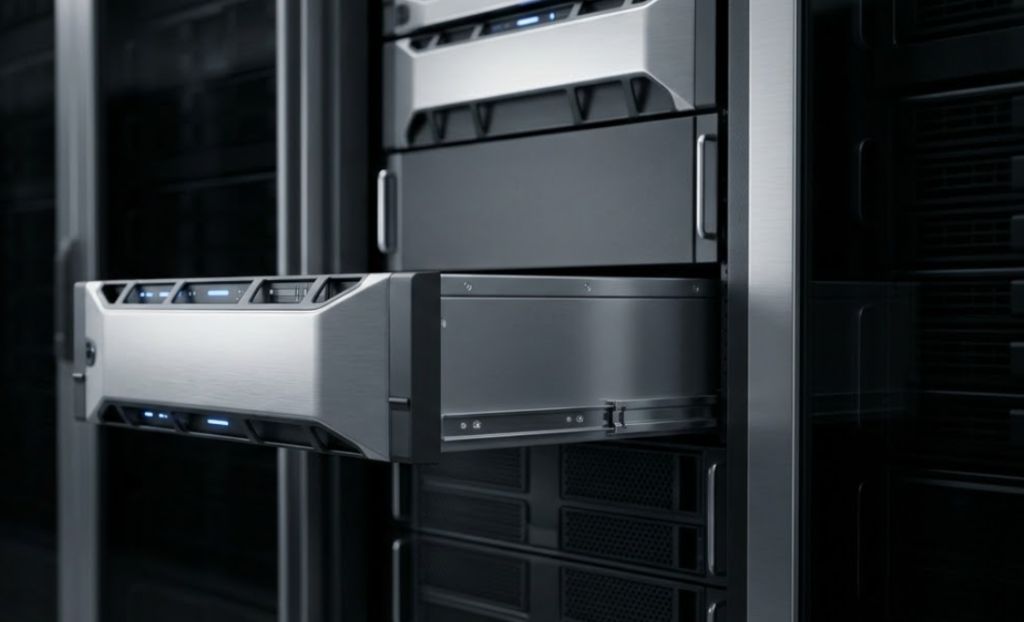
- Form Factor Constraints: Data centers have strict spatial limitations. The new lithium packs must perfectly fit into existing standard 19-inch telecom racks or legacy battery cabinets.
Trading companies simply source pre-made packs and hope they work. As a true source factory, we approach this differently. We don’t just sell batteries; we engineer drop-in solutions that match the specific charge/discharge algorithms of major UPS brands.
Inside the Factory: The “Experience” Behind Premium Quality
What exactly happens on the production line of a direct manufacturer of lithium UPS battery packs? True quality control happens long before the product is boxed.
When you bypass middlemen and go factory direct, you are paying for stringent, transparent manufacturing processes:
- Strict Cell Grading and Sorting: Not all cells are created equal. In our facility, every single LiFePO4 cell undergoes rigorous capacity grading, internal resistance testing, and voltage matching. We only group cells with identical characteristics (variance less than 1mV and 1mΩ) into a single pack. This prevents the “weakest link” scenario that causes premature pack failure.
- Custom BMS Configuration: The BMS is the brain of the battery. For UPS applications, we program the BMS with custom firmware to handle high-surge currents, protect against over-discharge during prolonged outages, and ensure precise thermal management.
- Rigorous Aging Tests: No battery leaves our factory floor without completing a mandatory 72-hour aging process. We cycle the assembled packs under full load conditions to simulate real-world data center stress, ensuring zero defects upon delivery.
TCO Breakdown: Lithium vs. Lead-Acid
We believe in complete transparency. It is an objective fact that the upfront capital expenditure (CapEx) of a wholesale premium lithium battery for UPS is generally 1.5 to 2 times higher than a traditional VRLA battery.
However, B2B procurement is driven by Total Cost of Ownership (TCO) and Return on Investment (ROI). Let’s look at the data over a 10-year operational horizon:
| Specification / Metric | Traditional Lead-Acid (VRLA) | Premium Lithium (LiFePO4) | The Factory-Direct Advantage |
| Cycle Life | 300 – 500 cycles | 3,000 – 6,000+ cycles | No need for 3-5 year replacement cycles. |
| Design Life | 3 – 5 years | 10 – 15 years | Aligns with the lifespan of the UPS IT infrastructure. |
| Weight | 100% (Baseline) | 30% – 40% of Lead-Acid | Reduces floor load-bearing requirements. |
| Footprint (Volume) | 100% (Baseline) | 50% of Lead-Acid | Frees up expensive server rack space. |
| Maintenance | Regular checks, off-gassing | Zero maintenance | Drastically reduces OPEX and labor costs. |
| 10-Year TCO | High (Requires 2-3 replacements) | Low (One-time investment) | Maximum ROI achieved within years 3 to 4. |
By working directly with the factory, procurement managers can further reduce that initial CapEx barrier by eliminating the 20-30% markup typically charged by local distributors and trading agencies.

The Market Landscape: Global Brands vs. OEM/ODM Factory Direct
When IT managers and system integrators look to procure lithium upgrades, they typically evaluate three main avenues: Tier 1 Global Brands, Commercial Brands, and Factory-Direct OEM/ODM partners. Let’s break down the commercial and technical realities.
Table 1: Cost Structure & Market Positioning
The biggest hidden cost in UPS lithium battery procurement is the “brand tax.” When you buy a ready-made lithium UPS from a legacy brand, a significant portion of your CapEx goes toward their marketing, distribution network, and overhead.
| Sourcing Model | Example Brands in Market | Brand Premium (Markup) | Customization Options | Cost Efficiency for Bulk Procurement |
| Tier 1 Global UPS Brands | APC (Schneider), Eaton, Vertiv | High (40% – 60%+) | None (Closed ecosystem) | Low (Rigid pricing tiers) |
| Commercial / Retail Brands | CyberPower, Tripp Lite | Medium (20% – 40%) | None | Medium |
| Trading Companies | Various Resellers | Varies (15% – 30%) | Limited (Usually just stickers) | Low (Unstable supply) |
| OEM/ODM Factory Direct | (Your Custom Brand) | Zero (Direct Source) | Full (Silkscreen, Casing, BMS) | High (Maximum ROI) |
Table 2: Technical Flexibility & Supply Chain Control
Beyond price, B2B procurement is about technical integration. Big brands operate on a “take it or leave it” model. Working directly with a manufacturer flips this dynamic, giving you full control over the engineering.
| Technical & Supply Chain Feature | Tier 1 Global Brands | Commercial Brands | OEM/ODM Factory Direct |
| BMS Protocol Customization | Locked / Proprietary | Basic / Non-customizable | Fully customizable (RS485, CAN) |
| Cell Quality Transparency | Opaque | Opaque | 100% Transparent (Grading data) |
| Form Factor Flexibility | Standard catalog sizes only | Standard catalog sizes only | Custom rackmount or cabinet dims |
| Lead Time Control | Subject to global stock | Retail availability | Prioritized production schedules |
Case Study: Seamless Lithium Upgrade for a Tier-3 Data Center
The Challenge: A regional data center needed to replace aging VRLA batteries across their existing legacy UPS cabinets. Facing strict spatial constraints, they couldn’t afford to replace the entire UPS electronics infrastructure or risk communication errors with the new batteries.
The Factory-Direct Solution: Our engineering team designed a custom 51.2V LiFePO4 rack-mounted pack. Crucially, we custom-programmed the BMS to communicate flawlessly with their legacy UPS via RS485, perfectly mimicking the required charging curves to prevent any system error codes.
The Results:
- 50% Space Saved: Freed up half of the existing battery rack space for future server expansion.
- Plug-and-Play Integration: Zero downtime and no need to replace the original UPS inverters.
- OPEX Slashed: Eliminated the expensive 3-year lead-acid replacement cycle, securing a projected 60% maintenance savings over the next decade.
The Strategic Edge of OEM/ODM Partnerships
When you source directly, you aren’t just buying hardware; you are extending your own company’s R&D capabilities.
- Complete Customization (ODM): Need a specific high-voltage system (e.g., 384V)? Need an IP65-rated enclosure for telecom base stations? Or your logo silkscreened on the casing? An OEM/ODM partner allows you to build your own brand equity in your local market.
- Supply Chain Stability: For large-scale deployments, lead time is everything. A factory-direct partnership guarantees scalable manufacturing capacity and consistent pricing insulated from retail market fluctuations.
- Direct Technical Support: If a communication error occurs between the battery and a proprietary UPS system, a trading company cannot fix it. A factory can. Our engineers speak directly to your engineers, rapidly deploying firmware updates.

Take Control of Your Supply Chain
The transition to lithium backup power is no longer the future; it is the present standard. As the market matures, the competitive advantage will belong to those who control their supply chain.
Whether you are seeking a reliable wholesale premium lithium battery for UPS to expand your distribution catalog, or you need a custom-engineered ODM solution for a massive data center project, cutting out the middleman is the most profitable path forward.
Ready to upgrade your power solutions? Stop dealing with intermediaries and start working with the source. Contact our engineering team today to discuss your OEM/ODM requirements and get a direct factory quote for your next project.
Frequently Asked Questions (FAQs)
Q1: Can your lithium batteries communicate with our existing legacy UPS inverters?
A: Yes. Because we design and program our own Battery Management Systems (BMS), we can customize the communication protocols (such as RS485, CAN bus, or dry contacts) to ensure seamless integration and precise data handshakes with most major UPS inverter brands on the market.
Q2: What is the Minimum Order Quantity (MOQ) for OEM/ODM factory-direct orders?
A: We understand that enterprise clients need to test thoroughly before mass deployment. We typically offer low MOQs for initial sample testing and technical validation. Once the custom specifications are approved, we can scale up rapidly to handle high-volume batch orders. Contact our sales team for specific MOQ tiers based on your customization needs.
Q3: Are your UPS lithium battery packs certified for international markets?
A: Absolutely. Safety and compliance are our top priorities. Our lithium cells and assembled battery packs undergo rigorous testing and can be supplied with essential certifications required for global markets, including CE, UL, UN38.3, and MSDS.
Q4: How do you handle the shipping of hazardous materials like lithium batteries?
A: As an experienced export manufacturer, we have a robust logistics network. We provide all necessary UN38.3 and MSDS documentation and work with certified freight forwarders who specialize in Class 9 hazardous materials, ensuring safe, compliant, and timely delivery to your port or warehouse.
Q5: Is a lithium UPS battery really a “drop-in replacement” for VRLA lead-acid batteries?
A: In terms of physical footprint and basic voltage range, yes. However, true “drop-in” success relies on the BMS handling the UPS system’s charging curve. Lead-acid chargers behave differently than lithium chargers. Our factory-engineered BMS is programmed to safely manage the existing VRLA charging algorithms, allowing you to upgrade your battery cabinet without replacing your expensive UPS electronics.


