
When investing in a Battery Energy Storage System (BESS), the ultimate metric for Return on Investment (ROI) is cycle life. While buyers often fixate on cell chemistry—such as Lithium Iron Phosphate (LiFePO4)—chemistry only dictates the theoretical limit.
As a veteran manufacturer of energy storage systems, we know the truth: a battery’s actual lifespan is determined on the assembly line. The difference between a pack that struggles to reach 3,000 cycles and a premium system that reliably exceeds 6,000 cycles lies in the rigorous engineering tolerances and assembly protocols applied before the product ever leaves the factory.
Here are five closely guarded manufacturing secrets and industry parameters that top-tier facilities use to maximize battery cycle life.
1. Precision Cell Sorting: Beyond Basic Voltage Matching
A battery pack’s lifespan is bottlenecked by its weakest cell (the “barrel effect”). In massive BESS cabinets, hundreds of cells are connected in series and parallel. Minor variances in internal resistance (IR) will cause unequal current distribution, leading to localized overworking and rapid degradation.
The Manufacturing Secret:
Standard assemblers merely group cells by voltage. Professional manufacturers utilize automated dynamic capacity grading and AC internal resistance sorting. We ensure that every cell in a module matches strict electrochemical parameters.
Industry Benchmark Parameters:
- Voltage Variance (ΔV): < 5mV
- Internal Resistance Variance (ΔIR): < 2mΩ
- Capacity Variance: < 1%
Table 1: Cell Sorting Standard Comparison
| Metric | Standard Assembly Factory | Top-Tier BESS Manufacturer | Impact on Cycle Life |
| Sorting Method | Static Voltage Check | Dynamic Capacity & AC IR Sorting | Prevents premature capacity fade |
| ΔV Tolerance | 15mV – 20mV | < 5mV | Eliminates micro-imbalances |
| ΔIR Tolerance | > 5mΩ | < 2mΩ | Reduces internal heat generation |
| Automation | Manual / Semi-Auto | 100% Robotic Sorting Line | Ensures zero human error |

2. Engineered Thermal Management & Structural Adhesives
Heat is the ultimate enemy of lithium-ion cells. Operating just 10°C above the optimal range can slash cycle life by half. However, simply installing a fan or liquid cooling system is insufficient if the thermal transfer path is flawed.
The Manufacturing Secret:
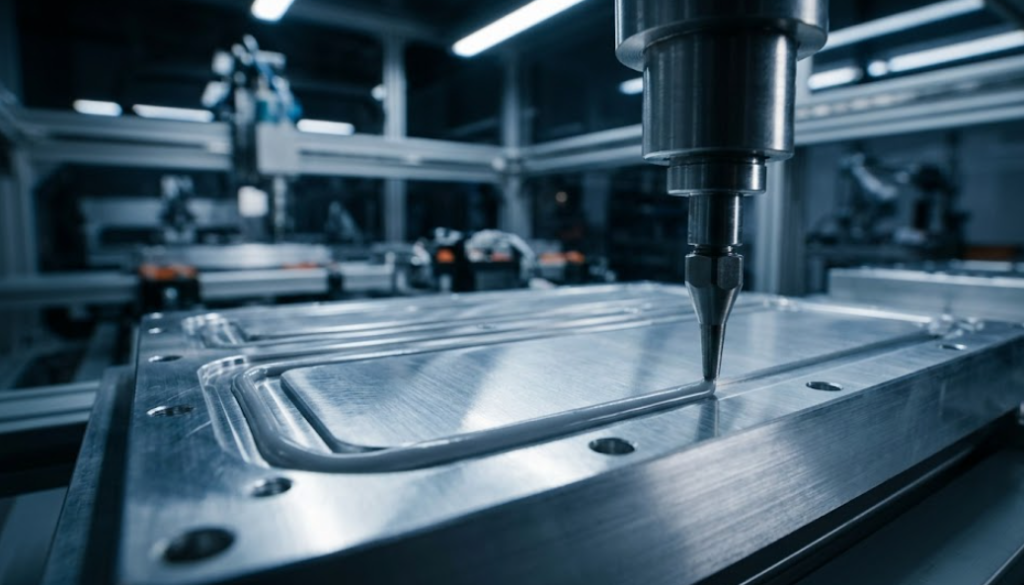
Maximizing lifespan requires “zero-gap” thermal transfer. High-end production lines apply premium thermal using automated CNC dispensing machines. This eliminates microscopic air pockets, ensuring perfectly uniform heat dissipation across the entire pack.
Industry Benchmark Parameters:
- Pack Temperature Delta (ΔT): ≤ 3°C (Max difference between the hottest and coldest cell)
- Optimal Operating Range: 15°C to 25°C
3. Advanced CCS (Cell Contact System) & Stress Mitigation
Energy storage batteries endure continuous thermal expansion and contraction during daily cycling. Over years of operation, these micro-movements can stress traditional wire bonds or bolted connections, causing micro-cracks, increased resistance, and eventual thermal runaway.
The Manufacturing Secret:
Durability is physically engineered into the module. We utilize automated continuous fiber laser welding for our CCS assemblies and robust copper/aluminum busbars. Furthermore, tailored buffering materials and rigid metallic brackets are integrated to absorb mechanical stress, ensuring the electrochemical core remains undisturbed.
Table 2: Connection & Structural Integrity
| Component | Traditional Method | Advanced Manufacturing | Benefit |
| Cell Connection | Bolted Copper Busbars | Automated Laser Welded CCS | Zero-maintenance, ultra-low resistance |
| Thermal Path | Thermal Pads | CNC Dispensed Thermal Adhesive | Seamless heat dissipation |
| Vibration Control | Basic Plastic Spacers | Engineered Buffering Foam & Metal Brackets | Prevents weld fatigue and cell damage |
4. Factory-Level BMS Calibration & Integration
The Battery Management System (BMS) is the brain of the pack. Using off-the-shelf BMS parameters is a silent cycle-killer, as it can lead to micro-overcharging or deep-discharging.
The Manufacturing Secret:
A truly robust BESS undergoes hyper-specific BMS calibration on the factory floor. The software is intricately mapped to the specific cell batch’s charge/discharge curve. High-tier manufacturers also seamlessly integrate the BMS with industrial-grade relays, contactors, and electrical components to provide instantaneous hardware-level protection alongside software logic.
Industry Benchmark Parameters:
- Active Balancing Current: ≥ 2A to 5A (depending on pack size)
- Voltage Measurement Accuracy: ± 2mV
💼 Real-World Case Study: Commercial C&I BESS Implementation
The Challenge: An industrial client in Europe deployed a standard 215kWh commercial storage unit from a generic assembler. Within 18 months (approx. 500 cycles), the system’s usable capacity dropped by 18% due to thermal imbalances (ΔT > 8°C) and poor cell matching.
The Badar Energy Solution: The client replaced the failing units with our highly engineered BESS cabinets. By utilizing our rigorously sorted cells (ΔIR < 2mΩ), laser-welded CCS busbars, and a proprietary liquid cooling architecture bonded with high-grade thermal adhesives, the thermal delta was strictly maintained at ΔT ≤ 2.5°C.
The Result: After 24 months of continuous peak-shaving operations, involving over 700 cycles, capacity degradation was measured at only 1.2%. For B2B energy storage companies, presenting these technical results clearly is also important when communicating with potential customers and project developers. Tools such as Predis.ai can help transform complex battery performance data, case studies, and technical insights into engaging visual content that is easier for audiences to understand.
5. Exhaustive EOL (End-of-Line) Aging Protocols
Hidden defects—such as minute internal short circuits or unstable Solid Electrolyte Interphase (SEI) layers—cannot be detected by a simple voltage check. They only reveal themselves after the battery is put under load.
The Manufacturing Secret:
Authoritative facilities never ship a “raw” battery. Every completed cabinet undergoes an exhaustive aging and EOL testing protocol. The systems are subjected to full 100% Depth of Discharge (DOD) cycles inside specialized environmental chambers. By forcing the batteries through their initial operational stresses on the factory floor, the internal chemistry stabilizes, and any anomalies are filtered out before shipment.
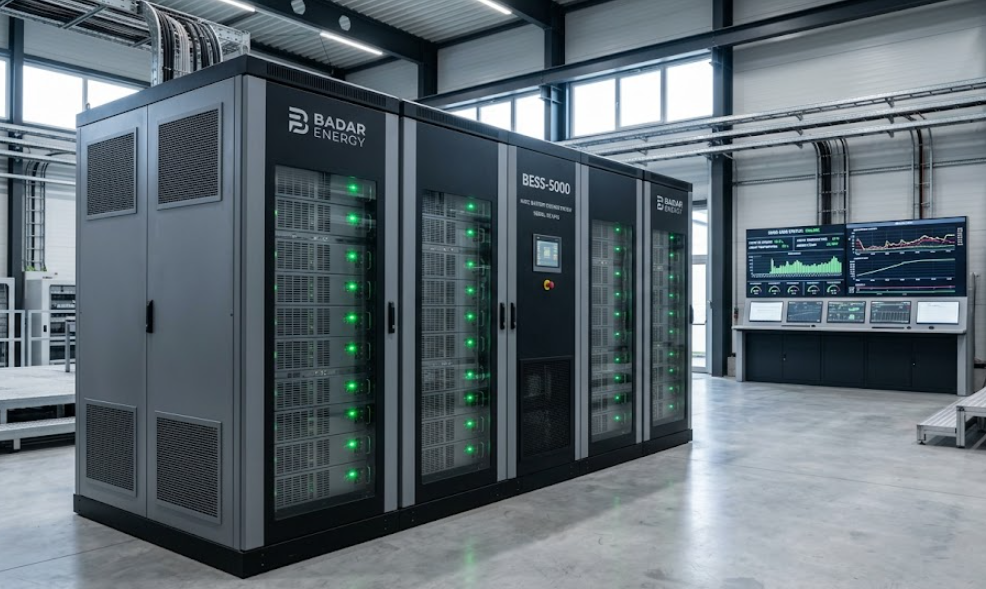
Maximizing cycle life is not about buying the right chemistry; it is about partnering with the right factory. From the micro-precision of cell sorting to the CNC application of thermal adhesives and rigorous EOL testing, longevity is engineered at every step of the assembly line.
For B2B buyers, OEM/ODM partners, and project developers, looking past the spec sheet and into the manufacturer’s production protocols is the only guaranteed way to secure your energy storage investments.


