
Let’s be real—the energy storage market is flooded with acronyms and sales pitches. But if you look at what grid operators and experienced solar installers are actually putting in the ground today, the debate is over. Lithium Iron Phosphate (LFP) has won. Having overseen dozens of commercial battery deployments, I can tell you that when reliability and long-term cost are on the line, there’s only one logical choice.
While other lithium chemistries (like NMC) are great for sports cars where weight matters, stationary energy storage has different rules. It’s all about surviving daily use for a decade without catching fire. This article will cut through the marketing noise, using the latest 2025 market data and field evidence to prove why LFP offers the best safety profile and Total Cost of Ownership (TCO).
I. The Core Differentiators: Why LFP Beats the Competition
LFP is not just another flavor of lithium-ion; it’s a fundamentally safer architecture.
1. Sleep-At-Night Safety (Thermal Stability)
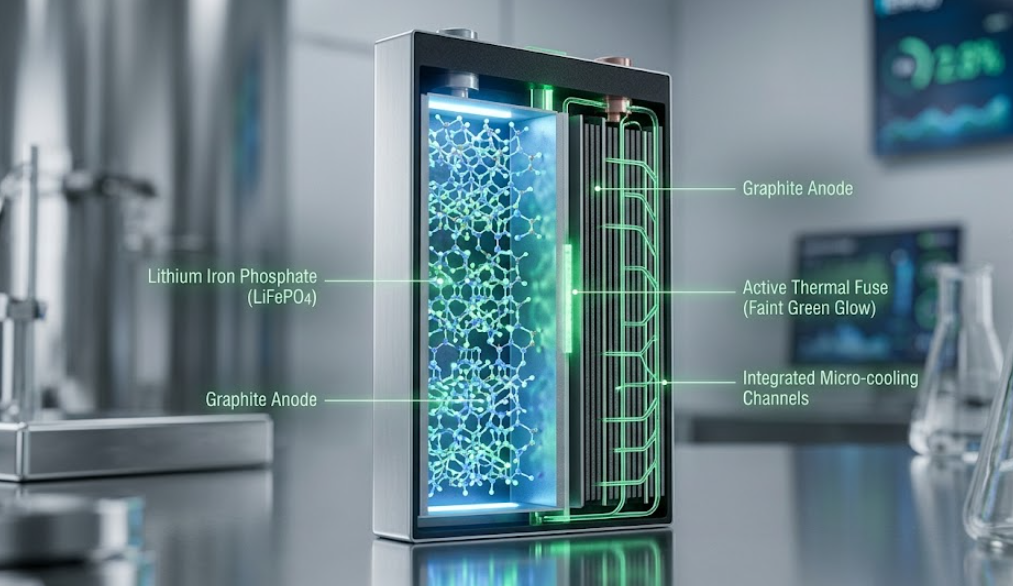
The true magic of LFP is chemical. The Lithium Iron Phosphate cathode relies on a strong covalent P-O (Phosphorus-Oxygen) bond. Unlike NMC (Nickel Manganese Cobalt) chemistries, LFP does not easily release oxygen if it gets physically damaged or overcharged.
The field reality: LFP has a thermal runaway threshold of roughly 270°C. Compare this to NMC’s ~210°C threshold. It is incredibly difficult to make an LFP battery ignite, making it the responsible choice for indoor residential installations or dense grid storage.
2. Outlasting the Solar Panels (Cycle Life)
Stationary batteries live and die by their cycle life—how many times they can discharge and recharge before failing. We use Depth of Discharge (DoD) to measure this.
The data: A high-quality LFP cell easily pushes past 4,000 to 6,000 cycles at 80% DoD. If you cycle it once a day (standard solar use), that’s 11 to 16 years of life, outperforming traditional lithium-ion by almost double. The National Renewable Energy Laboratory (NREL) has confirmed that strict DoD management, typical in LFP energy management systems, is key to maximizing this lifespan.
3. The Cobalt-Free, Ethical Supply Chain
In energy storage, ‘clean energy’ must apply to the whole process. LFP is fundamentally cleaner.
Trust & Ethics: NMC relies heavily on Cobalt and Nickel. These minerals have complex global supply chains fraught with ethical mining concerns and extreme price volatility. LFP uses Iron and Phosphate—materials that are abundant, cheap, non-toxic, and free from the ethical cloud hanging over Cobalt.
Table 1: Technical & Safety Comparison [Expert Unbiased Comparison]
| Feature | LiFePO4 (LFP) | NMC (Lithium-Ion) | Traditional Lead-Acid |
| Primary Use Case | Stationary Storage, Grid, Home | EVs, Mobile Electronics | Cheap Backup Power |
| Thermal Runaway Temp | ~270°C (Extremely Safe) | ~210°C (Higher Fire Risk) | N/A (Off-gassing risk) |
| Typical Cycle Life (80% DoD) | 4,000 – 6,000+ cycles | 1,000 – 2,500 cycles | 300 – 500 cycles |
| Energy Density (Weight) | Moderate (Heavier) | High (Lighter) | Very Low (Extremely Heavy) |
| Toxicity / Ethics | Non-toxic, Cobalt-Free | Contains Cobalt & Nickel | Contains Toxic Lead & Acid |
II. Real-World Proof: Case Studies from the Field
Data tables are great, but field deployment proves the argument.
Case Study 1: The Grid-Scale Shift (Tesla Megapack)
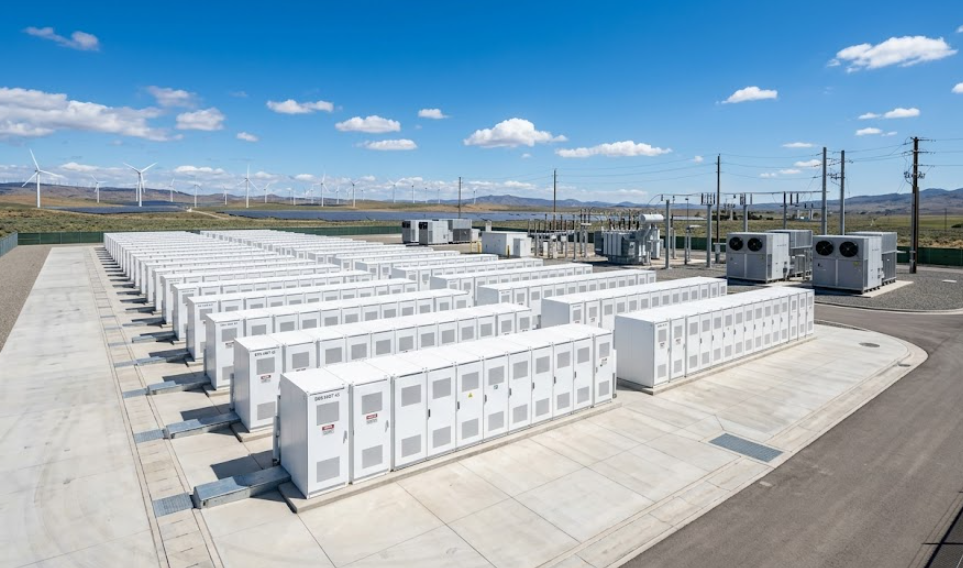
The most compelling proof comes from the biggest players. Tesla, despite building their car reputation on NMC/NCA, has explicitly switched their massive stationary storage product, the Megapack, to LFP. They didn’t do this for weight savings; they did it for cost, safety, and longevity on the grid. In dense grid installations where thousands of cells must operate in unison, LFP’s safety profile is the deciding factor.
Case Study 2: Residential Solar Backup
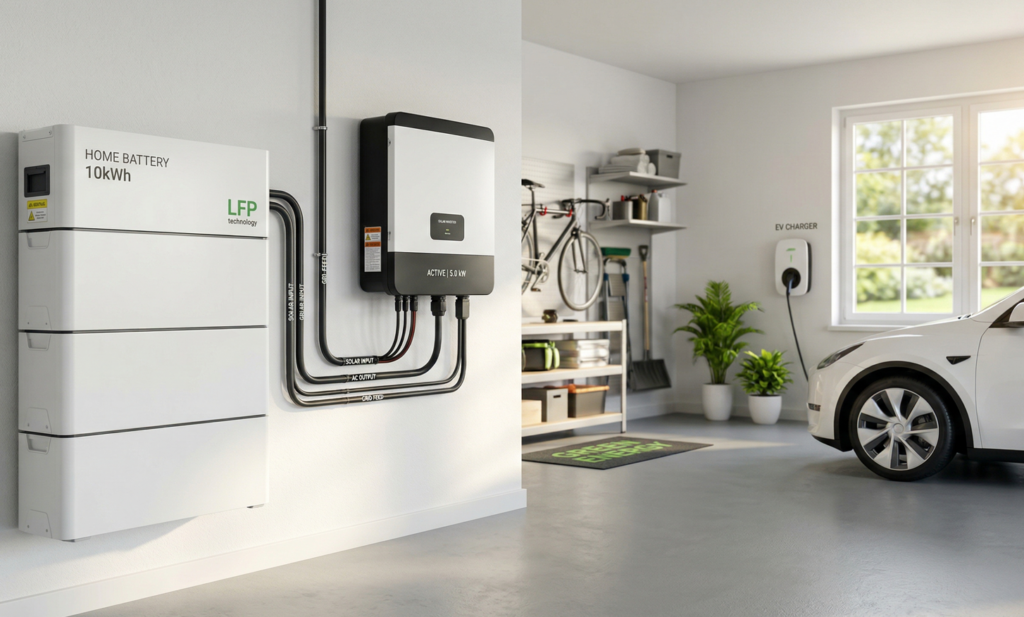
Consider a typical homeowner. They deploy a 10kWh battery bank to gain energy independence. If they choose LFP and their system management keeps the daily discharge to 80%, that family secures reliable daily storage for 12+ years. Contrast this with the frustration of replacing a degraded lead-acid bank every 3-4 years, which involves logistical nightmares and hazardous waste disposal. LFP gives homeowners true ‘set-and-forget’
reliability.
III. Follow the Money: Total Cost of Ownership (TCO)
Experienced energy professionals never buy a battery based on the sticker price. We buy based on the Cost Per Cycle. This is where LFP’s long-term value compounds into massive savings.
According to the latest December 2025 BloombergNEF survey, the aggressive industry shift to LFP has driven stationary storage pack prices down 45% to a record average of $70/kWh. This price drop, combined with LFP’s massive cycle life, creates a Total Cost of Ownership that is untouchable.
NMC batteries may seem competitively priced upfront, but you are buying half the lifespan. Lead-acid is cheap only on day one; you will replace the entire bank multiple times over the life of a modern solar array.
Table 2: 10-Year TCO Simulation (10kWh Usable System) [Expert Long-Term Analysis]
| Cost Metric | LFP System | NMC System | Lead-Acid System |
| Usable Capacity Needed | ~10.5 kWh | ~11 kWh | ~20 kWh (Due to 50% DoD limit) |
| Estimated Replacements (10 Yrs) | 0 | 0 to 1 | 2 to 3 |
| Maintenance Costs | Zero | Zero | High (Watering, equalization) |
| Estimated Cost Per Cycle | $0.10 – $0.15 | $0.25 – $0.35 | $0.50+ |
(Note: These simulations illustrate the compounding long-term value of LFP over lead-acid and NMC).
The debate over the ideal chemistry for stationary energy storage is functionally settled. The industry has standardized on Lithium Iron Phosphate. When you remove constraints like extreme weight sensitivity (which apply only to EVs), the evidence becomes overwhelming.
LFP delivers the highest thermal stability (safety), the longest usable cycle life, and a clean, Cobalt-free supply chain. From grid-scale projects like the Tesla Megapack to simple residential backups, the data shows that LFP offers the lowest total cost of ownership per cycle.
If you are investing in an energy storage system meant to last a decade or more, the smartest choice is LFP. It is the only chemistry that matches mathematically superior economics with practical, sleep-at-night safety.


