

Let’s be honest about the hardest part of utility-scale renewable development. You’ve secured the land, the permits are in place, and the grid interconnection is approved. But when you sit down with lenders to discuss the massive CAPEX for your new solar-plus-storage plant, the conversation inevitably stalls on one thing: risk.
How do you guarantee cash flow when the sun doesn’t shine as expected, or extreme weather threatens your assets? Unmitigated BESS financing risks can kill a project before ground is even broken.
This is exactly why top-tier developers are turning to kWh Analytics insurance to provide a financial safety net. But here is the secret most EPCs miss: getting approved for these innovative insurance policies requires passing strict hardware audits. Today, we are going to break down how to use revenue protection to secure funding, and why choosing the right hardware from a reliable BESS manufacturer like Badar Energy is the key to unlocking it.
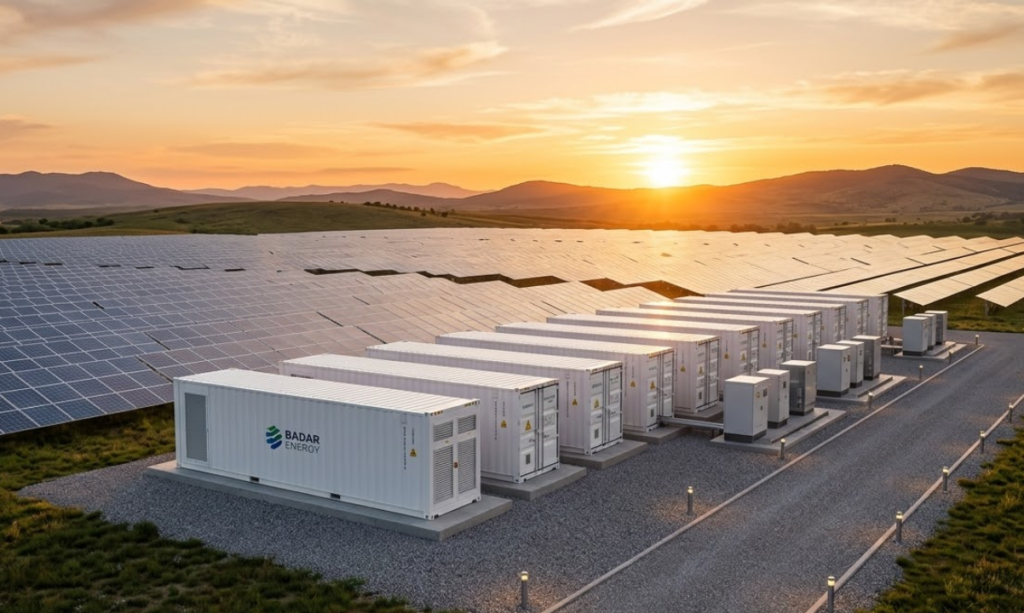
What Exactly is the “Revenue Put”?
If you are pitching a project to a bank, you need to understand the Solar Revenue Put. Traditional property insurance covers you if a hail storm physically smashes your inverters. But what if a year is just exceptionally cloudy? Or what if your system experiences unexpected downtime? Traditional insurance won’t pay out a dime for lost revenue.
As a leading provider of climate insurance for solar and storage, kWh Analytics created a mechanism that essentially guarantees up to 95% of a project’s estimated energy production. If your project underperforms, the policy pays the difference.
Why is this necessary? According to the authoritative 2023 Solar Risk Assessment by kWh Analytics, operational solar assets have broadly underperformed P50 estimates by about 8% over the last decade. Lenders read these reports. By putting an insurance floor under your revenue, you instantly solve their biggest anxiety.
As Jason Kaminsky, CEO of kWh Analytics, recently highlighted in an interview with AM Best resilient and well-designed renewable assets are reshaping how insurers price risk.
Table 1: Traditional Property Insurance vs. Revenue Protection
| Feature | Traditional Property & Casualty | kWh Analytics Revenue Put |
| Trigger for Payout | Physical damage (fire, hail, theft) | Financial shortfall (low irradiance, downtime) |
| Primary Beneficiary | Asset Owner (replaces equipment) | Lenders/Investors (guarantees debt repayment) |
| Impact on Financing | Mandatory, but doesn’t increase loan size | Significantly increases renewable energy project bankability |
The 3 Commercial Pillars of Securing Cash Flow
If you’ve ever watched the excellent “Energy Storage Financing” webinars frequently posted on YouTube by institutions like BloombergNEF or Norton Rose Fulbright, you’ll know that banks are obsessed with the Debt Service Coverage Ratio (DSCR). A project’s cash flow must comfortably cover its debt obligations. Here is how revenue insurance directly improves your financial model:
- Maximizing Bankability: Lenders size their loans based on the worst-case scenario (usually a P99 weather year). With a revenue put guaranteeing the floor, banks can lend based on a P50 scenario. This means you get more debt at better interest rates.
- Hedging Climate Volatility: Weather patterns are becoming less predictable. A data-driven climate policy transfers the meteorological risk from your balance sheet to the insurer’s.
- Mitigating Battery Degradation Anxiety: Investors worry about battery storage degradation over a 15-20 year lifecycle. As highlighted in BloombergNEF’s global energy storage market outlooks, extending battery duration and managing lifespan are critical for the next decade of storage deployment. Insurance models factor in performance guarantees, acting as a secondary financial backstop to the manufacturer’s warranty.
Table 2: Financial Impact Example (100MW Solar + BESS Project)
| Metric | Without Revenue Put | With Revenue Put |
| Lending Basis | P99 (Conservative) | P50 (Optimistic, insured) |
| Debt Capacity | $60 Million | $72 Million (+20%) |
| Equity Required | $40 Million | $28 Million (-30%) |
| Sponsor IRR | 8.5% | 11.2% (Significant Boost) |
The Hidden Hurdle: Why Hardware Dictates Insurability
Here is the reality check: underwriters do not write policies blindly. Before they issue a policy, they conduct rigorous engineering reviews of the hardware you plan to install.
If your BESS has a history of thermal runaway, uses substandard cells, or has opaque operating data, your project will be deemed uninsurable—or the premiums will be so high that they ruin your financial model. This is exactly where your supply chain choice makes or breaks the deal.
At Badar Energy, we engineer our energy storage systems specifically to meet the stringent technical requirements of international lenders and insurance underwriters. Insurers look closely at BESS thermal management because fires are the single largest physical risk to storage assets. The U.S. Department of Energy (DOE) BESS Procurement Checklist strictly mandates that developers “ensure that the request for proposals includes thermal management systems for the enclosure housing the BESS as well as the battery modules.”
Our systems strictly adhere to these top-tier safety standards. We utilize advanced liquid-cooling architectures that maintain cell temperature differences within a highly narrow margin. This drastically extends lifespan, mathematically lowers the risk profile, and makes underwriters very happy.
Table 3: Insurance Underwriting Checklist vs. Badar Energy Specifications
| Underwriter’s Concern | Typical Hardware Failure Point | Badar Energy Solution |
| Fire / Thermal Risk | Uneven air cooling, cheap BMS | Liquid-cooling, pack-level active fire suppression, real-time BMS data |
| Performance Degradation | Grade-B cells, high DoD cycling strain | Tier-1 LFP cells, >8000 cycle life with smooth, predictable degradation curves |
| Data Transparency | Closed-loop systems, hard to audit | Open API integration, comprehensive historical data logging for insurance audits |

The Bottom Line
Financial tools like kWh Analytics insurance are brilliant for optimizing your capital stack and securing project cash flow. But financial engineering can never cover up poor physical engineering.
To get the best insurance rates, secure the highest debt capacity, and ensure 20 years of profitable operation, you must start with a foundation of rock-solid hardware. Are you developing a commercial or utility-scale project and need an energy storage partner that understands both the technology and the strict requirements of project finance? Contact Badar Energy today. Let’s discuss how our bankable BESS solutions can make your next project a financial and operational success.
Frequently Asked Questions (FAQ)
Q1: What is the main difference between traditional property insurance and kWh Analytics insurance?
Traditional property and casualty insurance covers physical damage to your assets (like a fire or hail storm). It does not protect your financial model. kWh Analytics insurance, specifically products like the Solar Revenue Put, acts as a financial safety net. It covers the revenue shortfall if your project underperforms due to low solar irradiance or unexpected system downtime, ensuring your debt obligations are met.
Q2: How does a Revenue Put actually improve renewable energy project bankability?
Lenders are notoriously risk-averse, sizing their loans based on conservative, worst-case weather scenarios (P99). When you secure revenue protection, an investment-grade insurer guarantees a baseline of your expected cash flow. With the downside risk transferred to the insurer, lenders feel secure enough to base their loan on a P50 scenario, resulting in higher debt capacity and lower interest rates.
Q3: Can these policies mitigate BESS financing risks for standalone storage projects?
Absolutely. The market for climate insurance for solar and storage is maturing rapidly. For BESS, the primary financial risks involve round-trip efficiency losses and unforeseen battery storage degradation. Insurance products can now underwrite the performance of the battery system, but securing this coverage heavily depends on passing a strict technical audit of the hardware.
Q4: Why do insurance underwriters scrutinize BESS thermal management so closely?
Thermal runaway is the single largest catastrophic risk for energy storage systems. Systems with cheap battery management systems (BMS) are viewed as high-risk by underwriters. Systems equipped with advanced liquid-cooling BESS thermal management—like those manufactured by Badar Energy—maintain tight temperature controls, drastically reducing fire risk and extending the battery’s lifespan, which translates directly to lower insurance premiums.
Q5: What is the most important trait of a reliable BESS manufacturer when seeking project insurance?Data transparency and hardware consistency are paramount. Insurers need to see a track record of safe operations and predictable degradation curves. A reliable BESS manufacturer will provide comprehensive operating data, utilize Tier-1 LFP cells, and offer bankable warranties. At Badar Energy, we engineer our systems specifically to pass the rigorous due diligence required by top-tier financial and insurance institutions.


