
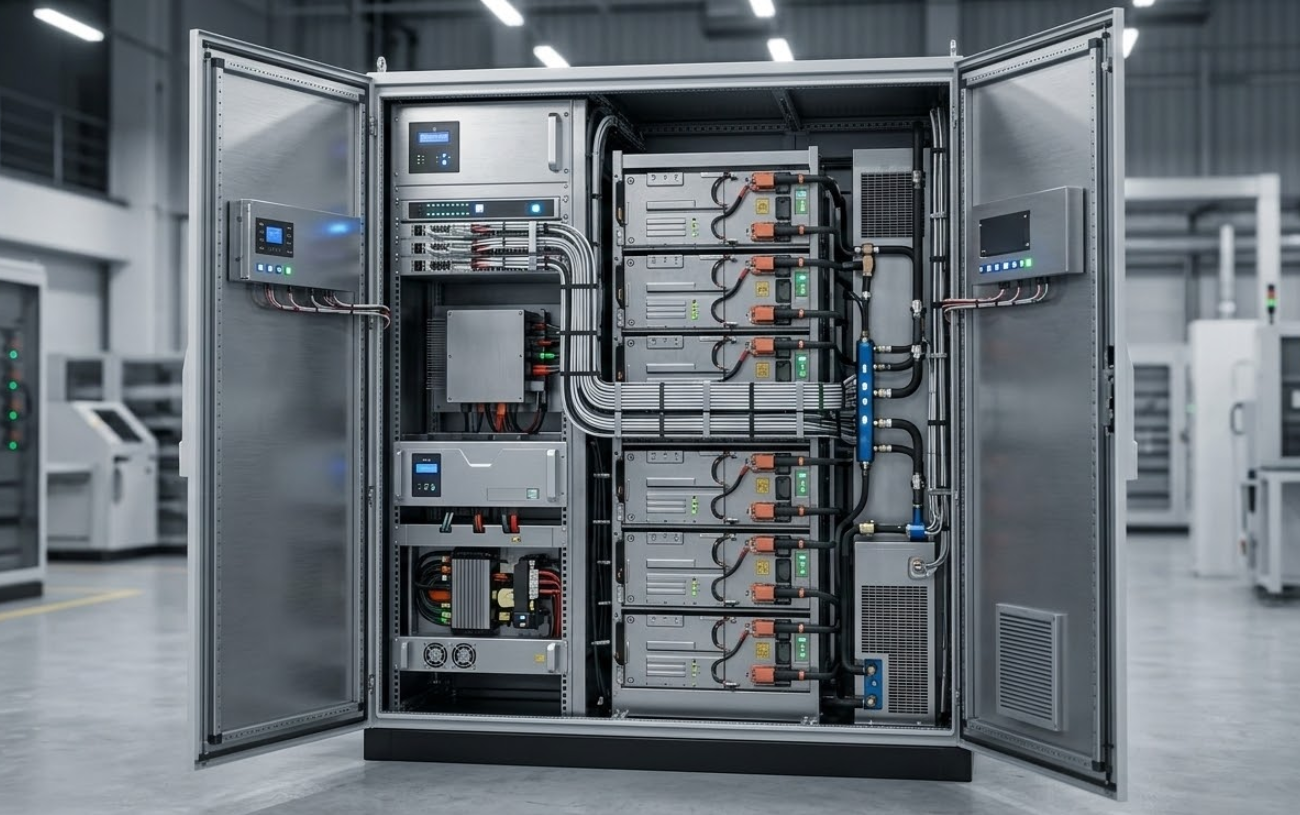
What Is a Commercial Energy Storage System?
A commercial energy storage system (BESS) is a sophisticated technology solution designed to capture electrical energy, store it on-site in advanced rechargeable batteries, and dispatch it precisely when it delivers the most value. Unlike massive utility-scale power stations that stabilize entire grids, a commercial BESS is installed directly on your facility’s premises, serving as the strategic backbone of your private energy infrastructure.
The fundamental shift that BESS enables is profound: your factory transforms from a passive consumer of grid electricity into an active manager of its own energy resources. Instead of accepting whatever the utility charges at any given moment, you gain the power to decide when to draw from the grid, when to use your own stored energy, and in some cases, when to sell energy back to the grid. This capability unlocks significant financial savings, ensures absolute resilience against grid failures, and accelerates the achievement of sustainability mandates.
The Charge-Store-Discharge Cycle
The operation of a commercial BESS follows an intelligent four-stage cycle that is continuously optimized to meet your specific business objectives.
Charging Phase: The system draws electricity from an energy source—either the utility grid during off-peak hours when electricity rates are at their lowest (e.g., $0.05/kWh), or from on-site renewable energy systems such as solar panels capturing excess power during peak sunlight. During this stage, the system’s inverter converts incoming alternating current (AC) power to direct current (DC) power, which charges the batteries and stores the energy in chemical form.
Storing Phase: Once charged, the energy is held securely within the system’s high-capacity battery modules. Advanced battery technologies used in commercial systems can store substantial amounts of energy for extended periods with minimal self-discharge, ensuring the power remains available when needed.
Discharging Phase: When stored energy is required—whether to avoid high peak-demand electricity prices (e.g., $0.20/kWh), to maintain operations during a grid outage, or to supplement power when renewable generation is low—the system discharges. The stored chemical energy converts back into electrical energy, with the DC power flowing to the inverter, which converts it back into AC power synchronized with your facility’s electrical system.
Managing Phase: This entire cycle is not manual; it is orchestrated by a sophisticated computer system. The energy management system (EMS) continuously analyzes utility electricity prices, your facility’s energy demand patterns, and solar production forecasts to make intelligent, autonomous decisions about when to charge and discharge, optimizing the system’s performance to achieve your desired financial and operational outcomes.
System Components and Architecture
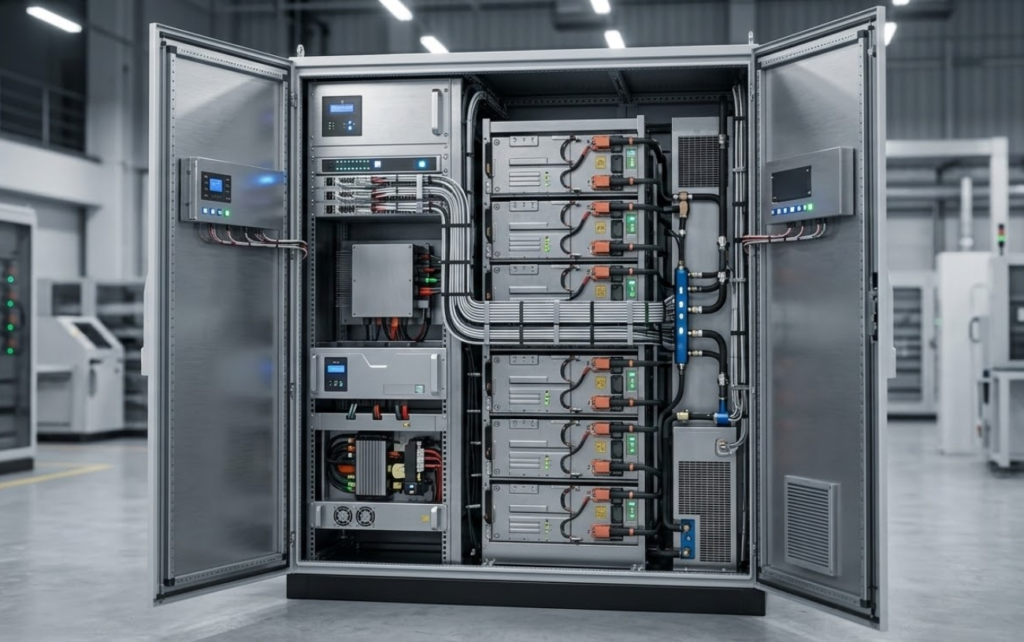
A common misconception is that a BESS is simply a large battery. In reality, it is a highly integrated system of complex components, each with a critical role. The seamless interplay between these subsystems is what unlocks the technology’s full potential. The following table outlines the key components and their functions:
| Component | Function | Impact on Performance |
| Battery System (LFP) | Stores electrical energy in chemical form | Determines system capacity, cycle life, and thermal stability |
| Battery Management System (BMS) | Monitors voltage, current, temperature, and state of charge for each cell | Ensures safety, prevents thermal runaway, and extends battery lifespan |
| Power Conversion System (PCS) | Converts DC battery power to AC for facility use and vice versa | Enables grid integration and determines charging/discharging efficiency |
| Energy Management System (EMS) | Optimizes charge/discharge scheduling based on prices and load forecasts | Directly determines ROI through intelligent control logic |
| Thermal Management | Maintains optimal operating temperature through active cooling | Extends battery life by up to 30% compared to air-cooled systems |
| Enclosure and Protection | Houses all components and protects from environmental exposure | Ensures durability, safety, and compliance with fire codes |
Why Your Factory Needs BESS Now
Demand Charges Are Crushing Your Bottom Line
The most immediate pain point for factory operators is the structure of electricity pricing itself. Utilities across North America, Europe, and Asia have adopted time-of-use (TOU) pricing models that charge significantly higher rates during peak hours—typically 9:00 AM to 6:00 PM—than during off-peak periods. What makes this particularly punitive for manufacturing is that demand charges often account for up to 50% of a facility’s total electricity bill.
In practical terms, this means that the very act of running your production lines during the day—when your machinery, HVAC systems, and lighting are all operating simultaneously—triggers the highest possible electricity rates. The peak-to-valley price ratio in most markets reaches 3:1 or higher. One kilowatt-hour used during peak hours may cost three times more than the same electricity used at night.
Consider a real-world example from a German electronics component factory that consumes approximately 600 kWh per day, with 400 kWh during peak hours. Before implementing energy storage, the facility paid €0.35/kWh during peak periods, resulting in a daily peak electricity cost of €140 and an annual cost of approximately €35,000. After installing a commercial BESS, the facility charged 260 kWh during off-peak hours at €0.12/kWh (costing €31.2) and discharged this stored energy during peak hours, saving €91 per day. This resulted in net daily savings of €59.8 and annual savings of approximately €14,950—a cost reduction of 42.7%.
Grid Reliability Is No Longer Guaranteed
The second critical driver for BESS adoption is grid reliability. Manufacturing facilities depend on continuous, stable power. A short outage or voltage fluctuation can halt production, damage sensitive equipment, and cause catastrophic downtime. Research shows that 98% of organizations report that a single hour of downtime costs over $100,000. For many factories, this figure is substantially higher.
A commercial BESS acts as an instantaneous backup power system, responding in milliseconds to grid disturbances. Unlike diesel generators that require seconds to start and stabilize, a modern BESS provides immediate power support, ensuring uninterrupted operations during grid instability or short-term blackouts. This capability is particularly valuable for facilities with sensitive manufacturing equipment, continuous production processes, or critical climate control requirements.
Renewable Integration Without Waste
As factories increasingly adopt on-site solar PV systems to reduce their carbon footprint, a new challenge emerges: excess daytime energy generation. Without storage, this surplus energy is either wasted or sold back to the grid at unfavorable rates. A commercial BESS captures that excess energy during peak sunlight hours and makes it available during evening peak pricing periods or cloudy conditions, dramatically improving the return on investment of your renewable energy system.
Understanding Battery Chemistry: LFP vs. Alternatives
The choice of battery chemistry is one of the most consequential decisions in a commercial BESS project. While the upfront cost may appear similar across different chemistries, the total cost of ownership over the system’s lifetime varies dramatically. The following table provides a comprehensive comparison of the three primary battery chemistries used in commercial applications:
| Specification | LFP (LiFePO₄) | NMC/NCA | Lead-Acid |
| Cycle Life | 6,000–8,000 cycles | 2,000–3,000 cycles | 500–1,000 cycles |
| Service Life | 10–15 years | 5–8 years | 3–5 years |
| Safety Profile | Extremely high | Moderate | Low |
| Thermal Management Cost | Lower (passive cooling sufficient) | Higher (active cooling required) | Minimal |
| Cost per kWh Delivered | Lower over lifetime | Higher | Highest |
| Operating Temperature Range | -20°C to 60°C | -10°C to 45°C | -20°C to 50°C |
| Charging Speed | Moderate | Fast | Slow |
| Environmental Impact | Low toxicity | Moderate toxicity | High toxicity |
| State of Charge Retention | Can safely sit at 100% SoC | Degrades at 100% SoC | Requires regular maintenance |
Why LFP Dominates Industrial Applications
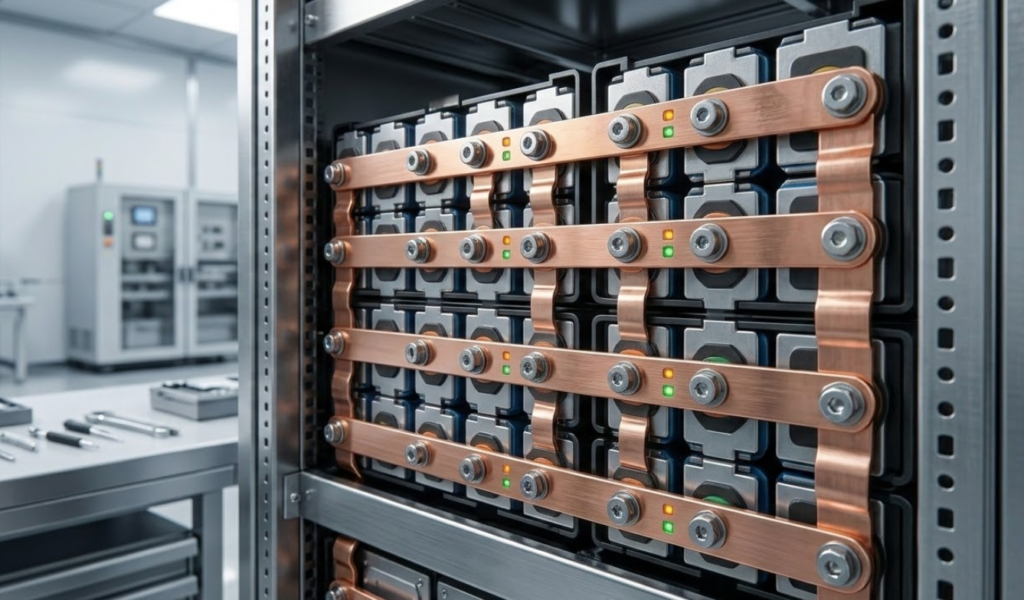
LiFePO₄ (LFP) has become the dominant chemistry for commercial and industrial energy storage systems, representing over 90% of the market.This dominance is not accidental—it reflects fundamental advantages that matter most in industrial settings.
Superior Cycle Life: LFP batteries deliver 6,000 to 8,000 full charge cycles, compared to 2,000 to 3,000 for NMC/NCA chemistries and only 500 to 1,000 for lead-acid. This translates directly to a lower cost per delivered kilowatt-hour over the system’s lifetime. When you divide the total system cost by the number of usable kWh delivered over 10-15 years, LFP emerges as the most economical choice.
Thermal Stability: LFP batteries exhibit superior thermal stability, allowing them to operate safely at 100% state of charge without rapid degradation. This is critical for industrial applications where the system may be fully charged overnight and held at that state during the day. NMC batteries, by contrast, degrade more rapidly when held at high states of charge, requiring more sophisticated (and expensive) thermal management systems.
Safety Profile: LFP chemistry is inherently safer than NMC or lead-acid alternatives. The iron-phosphate chemistry is thermally and chemically stable, making it resistant to thermal runaway—a critical consideration for systems installed in manufacturing facilities where safety is paramount.
The Business Case: ROI and Payback Periods
Understanding Your Payback Timeline
The return on investment for a commercial BESS depends heavily on your facility’s specific energy consumption patterns, local electricity pricing structure, and operational requirements. The following table outlines typical payback periods for different application scenarios based on 2024-2026 market data:
| Application Scenario | Typical Payback Period | Annual Savings Range | Best For |
| Peak Shaving / Demand Charge Reduction | 3–5 years | $15,000–$50,000+ | All factories with time-of-use pricing |
| Time-of-Use Arbitrage | 4–6 years | $10,000–$30,000 | Facilities with large price spreads |
| Backup + Peak Shaving Hybrid | 4–6 years | $20,000–$60,000 | Facilities needing both cost reduction and reliability |
| Microgrid / Off-Grid Replacement | 2.5–4 years | $30,000–$100,000+ | Remote or unreliable grid areas |
| Virtual Power Plant (VPP) Participation | 3–5 years | $5,000–$25,000 | Grid-connected facilities in VPP markets |
Cost Structure Breakdown
Understanding where your investment goes is essential for making informed decisions. Installed commercial BESS costs generally range from $180–300/kWh for larger containerized systems to $280–580/kWh for smaller or more customized installations.
The battery system itself represents the largest cost component, typically accounting for 50–60% of the total system cost. The remaining 40–50% covers the power conversion system, energy management system, enclosure, installation, grid connection, permitting, and warranty provisions. While it may be tempting to minimize costs by choosing the cheapest battery or PCS components, the quality of system integration has a greater impact on long-term ROI than component-level cost optimization.
Revenue and Savings Channels
Demand Charge Reduction: This is often the single largest ROI driver for factories operating under time-of-use pricing. By flattening your facility’s load curve during peak hours—using stored energy instead of drawing from the grid—you reduce your peak demand, which directly reduces your monthly demand charges. For facilities with demand charges representing 30–50% of their electricity bill, this savings channel alone can justify the BESS investment.
Energy Arbitrage: This strategy exploits the price difference between off-peak and peak periods. Your system charges during low-tariff periods (e.g., 11:00 PM to 7:00 AM at $0.05/kWh) and discharges during high-tariff periods (e.g., 2:00 PM to 6:00 PM at $0.20/kWh). The spread between these rates—the arbitrage opportunity—generates recurring savings that compound over the system’s lifetime.
Backup Power Cost Avoidance: For businesses where downtime is expensive, a BESS replaces or significantly reduces reliance on diesel generators. Diesel generators require ongoing fuel costs, regular maintenance, and periodic replacement. A BESS eliminates these recurring expenses while providing cleaner, quieter backup power.
Incentives and Policy Support: Many regions offer investment tax credits, capital subsidies, accelerated depreciation, or grid service compensation. These incentives can shorten payback periods by 20–40%, making BESS projects financially attractive even in markets with lower electricity price spreads.
Key Specifications and Performance Metrics
Critical Specifications for Industrial Systems
When evaluating commercial BESS options, focus on specifications that directly impact performance, reliability, and ROI:
Capacity and Power Rating: Capacity (measured in kWh) determines how much energy the system can store, while power rating (measured in kW) determines how fast the system can charge or discharge. For most industrial applications, systems range from 10 kWh to 20 kWh or larger, with power ratings from 5 kW to 125 kW or higher. The optimal sizing depends on your facility’s peak demand and the duration of peak pricing periods.
Charge/Discharge Rate: Expressed as a C-rate (where 1C means the system can fully charge or discharge in one hour), industrial systems typically operate at ≤0.5C. This gentle operation extends battery lifespan and reduces thermal stress. A system with a 0.5C rate can fully charge or discharge in two hours, providing sufficient flexibility for most peak shaving applications.
Response Time: One of the key advantages of BESS over diesel generators is instantaneous response. A modern BESS responds in milliseconds to grid disturbances or load changes, compared to seconds for diesel generators. This rapid response is critical for protecting sensitive manufacturing equipment from voltage sags or frequency deviations.
Thermal Management: The cooling system is critical for maintaining optimal battery temperature and extending cycle life. Liquid cooling systems maintain tighter temperature control than air-cooled systems, with temperature differences within the battery pack of ≤2.5°C compared to ±5°C or higher for air cooling. This superior thermal management can extend battery life by up to 30%.
Cycle Life and Warranty: Quality manufacturers specify cycle life at 80% depth of discharge (DOD), which represents real-world operating conditions. A system rated for 6,000 cycles at 80% DOD can deliver approximately 20–30 years of daily cycling at partial depths of discharge. Warranties typically range from 5 to 10 years, with longer warranties indicating manufacturer confidence in product reliability.
Common Pitfalls to Avoid
The Five Most Expensive Mistakes
Oversizing Without Load Analysis: Many facility managers install oversized BESS systems without conducting detailed energy consumption analysis. This results in low utilization rates, where the system sits partially charged for extended periods. An oversized system wastes capital and extends payback periods unnecessarily. The solution is to conduct a thorough load profile analysis before sizing your system.
Choosing Lowest-Cost Components: While component-level cost optimization seems prudent, it often undermines overall system performance. A cheap battery paired with a low-quality BMS or EMS can result in poor cycle life, inadequate thermal management, and suboptimal ROI. System integration quality matters more than individual component costs.
Inadequate Thermal Design: Insufficient cooling leads to elevated operating temperatures, which accelerates battery degradation and reduces cycle life. A system operating 10°C hotter than designed may lose 30% of its cycle life, requiring earlier replacement and destroying ROI projections. Invest in proper thermal management from the beginning.
Weak After-Sales Support: A BESS is not a “set it and forget it” system. It requires ongoing monitoring, parameter optimization, and predictive maintenance. Vendors without local service infrastructure or remote monitoring capabilities create risk of unexpected downtime and expensive emergency repairs.
Ignoring Battery Chemistry: Choosing a cheaper battery chemistry to save upfront costs often results in higher total cost of ownership. A lead-acid battery may cost 30% less initially but will require replacement 2–3 times during the lifespan of an LFP system, resulting in 2–3 times higher total cost.
Red Flags When Evaluating Vendors
When assessing potential BESS suppliers, watch for these warning signs: no proven track record in industrial applications, vague warranty terms or short coverage periods, no local service and support infrastructure, incompatible PCS and EMS components from different manufacturers, and no remote monitoring or predictive maintenance capability. These red flags indicate a vendor that prioritizes short-term sales over long-term customer success.
Choosing the Right Manufacturer
What Separates Best-in-Class Manufacturers
The difference between a successful BESS project and a disappointing one often comes down to your choice of manufacturer. Best-in-class manufacturers share several characteristics that directly impact your project’s success.
Direct Manufacturing: Manufacturers that own their production facilities and don’t rely on middlemen can offer better pricing and faster support. When you work directly with the manufacturer, you eliminate markup layers and gain access to engineering expertise that integrators cannot provide. This direct relationship also enables faster response times for technical support and warranty claims.
Proven Technology: Look for manufacturers with extensive field data demonstrating 6,000+ cycle LFP batteries in real-world industrial applications. Technology that has been proven in thousands of installations is far more reliable than new designs with limited track records. Proven technology also means better parts availability and more predictable performance.
Scalable Solutions: Your factory’s energy needs may evolve over time. Manufacturers offering modular designs from 10 kWh to 20 kWh and beyond enable you to start with a smaller system and expand as your needs grow. This scalability also provides flexibility to match system size precisely to your requirements, avoiding both undersizing and oversizing.
Quality Assurance: Advanced production lines with rigorous testing protocols ensure consistent product quality. Manufacturers that invest in automated testing, thermal cycling, and performance validation deliver more reliable systems than those relying on manual processes.
Long-Term Support: A 5-year warranty is the industry minimum, but best-in-class manufacturers often provide longer coverage. More importantly, they maintain local service infrastructure, offer remote monitoring, and provide predictive maintenance capabilities. This ongoing support is what transforms a BESS from a capital expense into a reliable asset.
Transparent Pricing: Best-in-class manufacturers provide clear, itemized pricing with no hidden costs or surprise fees. They explain what’s included in their pricing and what additional costs (if any) may apply for customization, installation, or grid connection.
Questions to Ask Potential Vendors
Before committing to a BESS project, ask potential vendors these critical questions:
- What is your manufacturing process and quality control methodology? Look for manufacturers that can describe their production process in detail, including automated testing, thermal cycling, and performance validation.
- Can you provide references from similar industrial applications? Request contact information for at least three facilities with similar size and application to yours. Speak directly with these references about their experience.
- What is your warranty coverage and what does it include? Understand exactly what failures are covered, what the response time is for warranty claims, and whether warranty covers labor or only parts.
- How do you handle technical support and emergency service? Ask about response times for technical questions, availability of 24/7 emergency support, and whether they have local technicians or rely on remote support.
- What is the expected cycle life at 80% depth of discharge? Avoid vendors who quote cycle life at unrealistic depths of discharge. 80% DOD is the industry standard for realistic expectations.
- Can your system integrate with existing renewable energy systems? If you have solar panels or other renewable sources, ensure the BESS can integrate seamlessly with your existing infrastructure.
- Do you offer remote monitoring and predictive maintenance? Modern BESS systems should include cloud-based monitoring that allows you to track performance, receive alerts, and implement predictive maintenance.
Implementation Roadmap
Begin by analyzing your facility’s energy consumption patterns in detail. Collect 12 months of utility bills to understand seasonal variations, identify peak demand periods, and calculate the potential savings from peak shaving. Simultaneously, analyze your local electricity pricing structure—specifically the peak-to-valley price ratio and demand charge rates.
Calculate preliminary savings by multiplying your peak-hour consumption by the difference between peak and off-peak rates. This rough calculation provides a baseline for ROI expectations. Also identify any grid reliability issues your facility has experienced—blackouts, voltage sags, or frequency deviations—that create a business case for backup power.
Phase 2: System Design (Weeks 3–4)
Work with your BESS manufacturer to design a system that matches your specific requirements. This design phase should include detailed load analysis to determine required battery capacity, power rating selection based on peak demand and charging time requirements, and thermal management design appropriate for your facility’s climate and installation location.
The design should also address electrical integration with your existing infrastructure, including interconnection with solar systems if applicable, coordination with your facility’s main electrical panel, and compliance with local electrical codes and utility interconnection requirements. Obtain preliminary grid connection approval from your utility company during this phase.
Phase 3: Installation and Commissioning (Weeks 5–8)
Once design is finalized, the manufacturer delivers system components to your facility. Professional installation includes mechanical mounting, electrical connections, thermal system setup, and integration with your facility’s control systems. After installation, comprehensive testing validates that all components function correctly and safely.
Commissioning includes configuring the energy management system parameters, setting charge/discharge schedules, programming demand response capabilities, and training your facility staff on system operation and maintenance. Safety testing and certification ensure compliance with UL 9540, NFPA 855, and local fire codes.
Phase 4: Optimization (Weeks 9+)
After the system is operational, the real optimization begins. Monitor actual system performance against projections, adjusting EMS parameters to maximize savings. Track actual savings versus your initial ROI calculations and identify any gaps. Implement your predictive maintenance schedule, monitoring battery health metrics to identify any issues before they become problems.
Explore additional revenue opportunities such as virtual power plant participation, grid services, or demand response programs. Many utilities offer compensation for facilities that can reduce load during grid emergencies or provide frequency regulation services. Your BESS is ideally positioned to participate in these programs.
Frequently Asked Questions
FAQ 1: How long does a commercial BESS typically last?
A quality LFP-based commercial BESS with proper maintenance can deliver 10–15 years of service life, with 6,000–8,000 full charge cycles. This translates to approximately 20–30 years of daily cycling at partial depths of discharge, making it a long-term asset rather than a consumable. The actual lifespan depends on operating conditions—systems operating at lower temperatures and lower depths of discharge last longer than systems operating at higher stress levels. This is why thermal management is so critical to maximizing system life.
FAQ 2: What is the difference between peak shaving and energy arbitrage?
Peak shaving focuses on reducing demand charges by flattening your facility’s load curve during peak hours. The system charges during off-peak periods and discharges during peak hours, reducing the maximum instantaneous power drawn from the grid. This directly reduces demand charges, which are typically calculated based on your facility’s peak demand during the billing period.
Energy arbitrage, by contrast, exploits price differences between off-peak and peak periods to generate savings. The system charges when electricity is cheap and discharges when electricity is expensive, capturing the price spread as profit. Most commercial BESS systems do both simultaneously—they reduce demand charges through peak shaving while also capturing energy arbitrage opportunities—for maximum ROI.
FAQ 3: Can I integrate BESS with my existing solar system?
Yes, absolutely. In fact, this is one of the most common and effective applications for commercial BESS. The BESS captures excess solar energy during peak sunlight hours (when solar generation exceeds facility consumption) and stores it for use during evening peak pricing periods or cloudy days. This dramatically improves the return on investment of your solar system by enabling you to use your own generated electricity during the highest-priced hours of the day, rather than selling it back to the grid at lower rates or wasting it.
The integration is straightforward—the BESS’s power conversion system connects to your solar inverter and facility electrical panel, allowing intelligent control of energy flow. Your energy management system coordinates charging from solar, discharging to meet facility loads, and grid interaction to optimize overall system performance.
Take Action: Get Your Customized BESS Solution Today
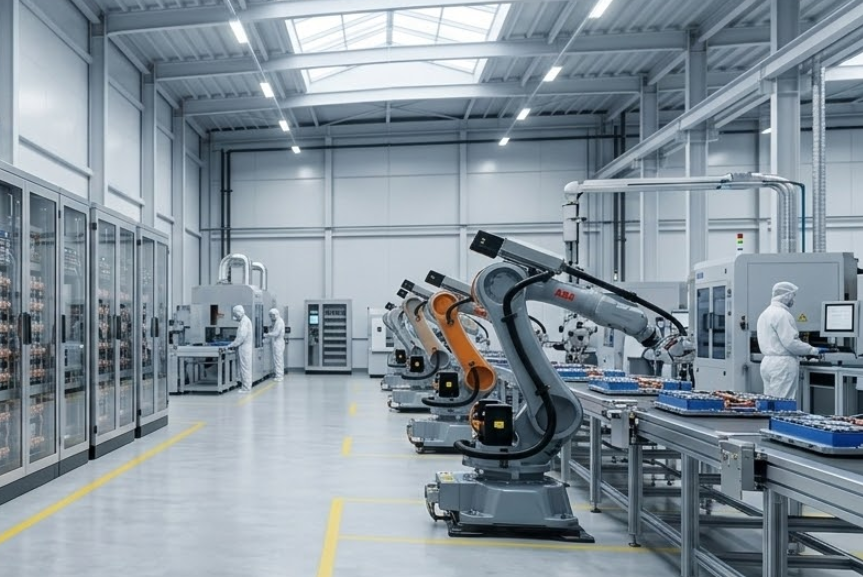
The decision to implement a commercial energy storage system is one of the most impactful investments your factory can make. The financial benefits are clear—payback periods of 3–6 years, annual savings of $15,000–$100,000+, and long-term asset value. The operational benefits are equally compelling—backup power for critical processes, improved power quality, and reduced grid dependency.
However, success depends on choosing the right system and the right partner. A properly designed and installed BESS from a quality manufacturer can transform your facility’s energy economics. A poorly designed system from an inexperienced vendor can disappoint and damage your confidence in the technology.
This is where direct partnership with an experienced BESS manufacturer makes all the difference. We are a source factory specializing in commercial energy storage solutions, providing OEM/ODM customization without middleman markup. Our LFP-based systems deliver 6,000+ cycle life, proven reliability, and scalable solutions from 10 kWh to 20 kWh and beyond. We back every system with a comprehensive 5-year warranty and rapid technical support from our advanced production facilities.
Don’t let peak electricity charges and grid reliability concerns limit your factory’s growth. Contact our engineering team today for a free energy consumption analysis and customized BESS proposal. We’ll evaluate your specific requirements, calculate your realistic ROI, and design a system that delivers maximum value for your investment. Contact us now to schedule your consultation with one of our energy storage specialists. We’re ready to help you take control of your energy future.


