
Navigating the saturated energy storage market to find a truly reliable Lithium Iron Phosphate supplier can feel like walking through a minefield. For battery pack assemblers and integrators, falling for fake “A-grade” marketing traps inevitably leads to catastrophic voltage drops and costly after-sales nightmares. Drawing from years of frontline manufacturing and procurement experience at Badar Energy, this guide strips away the industry fluff. We break down the hidden rules of LiFePO4 cell consistency, explain how to strategically match your order volume with the right supplier tier, and provide a battle-tested, on-site factory audit checklist to secure your supply chain.
Let’s be brutally honest—the energy storage market is completely saturated right now, and if you search for a Lithium Iron Phosphate supplier online, you’ll drown in a sea of results. Every single vendor out there claims to be a “source factory” and swears up and down that they only sell “automotive-grade A-cells.” But if you actually buy them, pack them, and run them for a few months, the ugly truth comes out: massive voltage drops, terrible consistency, and bloated cells.
1. Look Beyond the Spec Sheet: The “Hidden Rules” of LiFePO4 Cells
At Badar Energy, we’ve been through the wringer. We’ve paid our “tuition” to the market in our early days, and we’ve learned the hard way what works and what doesn’t. Today, I’m putting aside the corporate fluff to talk strictly about practical, on-the-ground experience. Whether you are handling energy storage battery cell procurement for the first time or looking to optimize your supply chain, here is exactly how you identify a truly reliable Lithium Iron Phosphate supplier.
Many procurement rookies make the fatal mistake of looking only at the nominal capacity and the unit price when evaluating a LiFePO4 cathode material manufacturer or cell factory. You need to understand that two cells labeled “280Ah” can be worlds apart in terms of raw materials and manufacturing precision. What experienced engineers actually care about is consistency and internal resistance.
The Painful Case Study: A couple of years ago, a competitor of ours tried to cut corners by partnering with a no-name high-quality LiFePO4 cell OEM (or so they claimed on Alibaba). They saved about 15% on the initial purchase. The result? Within six months, the internal resistance variance within a single batch exceeded 10%. Their Battery Management Systems (BMS) were constantly triggering alarms, and they had to send technicians out to swap out dead cells across multiple solar farms. Their after-sales cost ended up being three times what they originally “saved.”
At Badar Energy, this is exactly why we enforce a zero-tolerance incoming inspection policy. If a batch doesn’t meet our strict consistency threshold, it gets rejected at the loading dock. This isn’t just our standard; according to the [U.S. Department of Energy (DOE) Grid Energy Storage Technology Cost and Performance Assessment], cell-to-cell consistency is cited as the primary factor in preventing thermal runaway and ensuring the projected 10-year lifespan of a BESS (Battery Energy Storage System).
Table 1: The Real Difference Between LiFePO4 Cell Grades
| Parameter / Metric | True A-Grade (Top-Tier Supplier) | B-Grade / Downgraded (Spot Market) | Repurposed / Second-Life (Tear-downs) |
| Capacity Consistency | Extremely High (Variance < 1%) | Mediocre (Variance 3% – 5%) | Terrible (Variance > 10%) |
| Internal Resistance | Low & Uniform (e.g., < 0.2mΩ) | Inconsistent, generally higher | Severely aged, erratic resistance |
| Cycle Life | > 6,000 – 8,000 cycles | ~2,000 – 3,000 cycles | Unpredictable, high risk of sudden death |
| Ideal Application | C&I Storage, Utility-scale | Low-end e-bikes, solar street lights | High-risk, not recommended for serious use |

2. Matchmaking Matters: Choosing the Right Supplier Tier
Finding a reliable Lithium Iron Phosphate supplier doesn’t mean you must blindly chase the top three multi-billion-dollar giants in the industry. You have to look at your own order volume. If you only need a few hundred thousand dollars worth of cells a month, a Tier 1 giant either won’t entertain your RFQ or will put you at the very back of a six-month lead-time queue.
Finding a “well-matched,” highly capable mid-tier manufacturer is often the best strategy for most integrators. Organizations like BloombergNEF (BNEF) regularly publish Tier 1 battery manufacturer lists [External Link to BNEF Energy Storage Market Outlook], which are great for bankability, but for mid-sized integrators, Tier 2 offers the sweet spot of service and quality.
Table 2: Mapping the Domestic LiFePO4 Supplier Landscape
| Supplier Tier | Defining Characteristics | Pricing & Lead Time | Ideal Partner Profile |
| Tier 1 (The Giants) | Massive capacity, leads industry tech, >99% automation. | Premium pricing, rigid terms, long lead times. | Utility-scale mega-projects; requires massive MOQs. |
| Tier 2 (The Backbone) | Stable capacity, highly specialized (e.g., C&I storage), excellent service. | High cost-performance, flexible and responsive lead times. | Quality-focused integrators like Badar Energy seeking long-term growth. |
| Tier 3 (The Workshops) | Often just trading companies or manual pack assemblers, no core R&D. | Dirt cheap, lots of “spot inventory.” | High-risk buyers chasing only the lowest price. Expect to be burned. |

3. The On-Site Audit: Don’t Trust PPTs, Trust Your Eyes
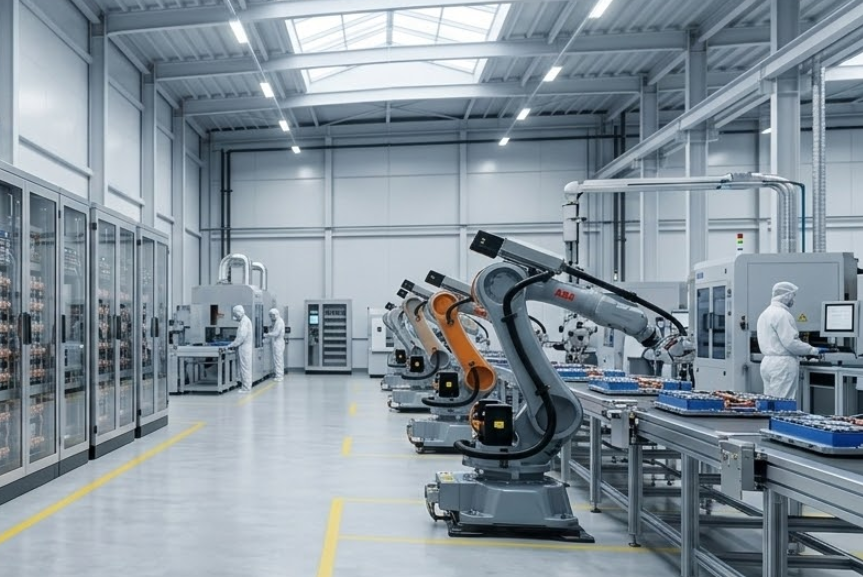
Never make a decision sitting in your office looking at a glossy PDF presentation. When we at Badar Energy vet a new core Lithium Iron Phosphate supplier, an unannounced or strictly controlled factory audit is mandatory. Bring your technical and QA leads. Don’t just look at their ISO certificates on the wall; look at the dust control in the coating room, check the actual operating temperatures in their aging rooms, and demand to see their MES (Manufacturing Execution System) traceability in real-time.
If they can’t scan a random cell on the line and tell you exactly what batch of cathode material went into it, walk away.
Table 3: Badar Energy’s Simplified Supplier Audit Scorecard
| Audit Dimension | The Reality Check (What we actually look for) | Weight | Automatic Dealbreakers (Red Flags) |
| Quality System & MES | Is IATF16949/ISO9001 actually practiced? Can the MES trace raw materials to the final cell? | 30% | Missing barcode traceability on core processes; chaotic batch management. |
| Production Environment | Humidity, temperature, and particulate (dust) control in mixing and injection rooms. | 30% | Dirty floors, improper worker PPE, visible cross-contamination risks. |
| R&D and Testing | Are lab machines actually running or gathering dust? Is there a dedicated cycle-aging area? | 20% | No in-house lab; relying entirely on purchased third-party test reports. |
| After-Sales SOP | Historical RMA (Return Merchandise Authorization) data and the real process for handling duds. | 20% | Sales reps dodging the question; no written protocol for compensating bad batches. |
4. Supply Chain Resilience: Surviving the Material Price Rollercoaster
Finally, a quick warning about market volatility. In the battery industry, the ability to secure inventory during a raw material shortage is just as critical as the price you pay. A top-tier Lithium Iron Phosphate supplier will honor their contracts and protect their strategic partners even when lithium carbonate prices skyrocket.
The reason Badar Energy has maintained a flawless delivery record for our energy storage systems—even during industry-wide supply crunches—is that we don’t treat our suppliers like expendable vendors. We build deep, strategic partnerships with source factories rather than constantly jumping around the spot market to save a penny.
At the end of the day, selecting the right Lithium Iron Phosphate supplier is a complex system-level engineering task. It dictates the safety, profitability, and lifespan of your final product. Spend the extra month doing your due diligence, running sample tests, and flying out to audit the factories. Never risk your brand’s reputation for a marginal discount on cell costs.
At Badar Energy, we believe that world-class energy storage solutions are built on the foundation of an uncompromising, transparent supply chain. If you are navigating the complexities of battery procurement, or if you want to see how we integrate these high-standard cells into our resilient energy systems, explore our [Badar Energy Storage Solutions] page or reach out to our engineering team directly. We are always happy to talk shop with fellow industry professionals.
5.Frequently Asked Questions (FAQ)
Q1: We are a mid-sized integrator and Tier 1 giants won’t answer our RFQs. What is our best move? A: Don’t try to force a relationship with a Tier 1 giant if your annual volume is under 50MWh. You will be placed at the bottom of their priority list. Instead, look for top-tier, specialized Tier 2 Lithium Iron Phosphate suppliers. These manufacturers offer superior flexibility, dedicated engineering support, and highly competitive pricing. At Badar Energy, we’ve found that partnering with agile, high-quality Tier 2 factories is often the secret to maintaining a resilient and cost-effective supply chain.
Q2: How can we quickly verify if a batch is genuine A-grade, as the LiFePO4 cathode material manufacturer promised? A: Never blindly trust the shipping manifest. First, inspect the QR codes laser-etched on the terminals; if they look scratched, re-lasered, or fail to scan in the manufacturer’s database, you are likely looking at B-grade or repurposed cells. Second, do a sample test immediately upon arrival. Run a charge/discharge cycle on a random sample to check the internal resistance (IR) and capacity variance. If the IR variance exceeds 3%, you have a major consistency issue on your hands.
Q3: What are the non-negotiable certifications we must ask for during energy storage battery cell procurement? A: At an absolute minimum, the cells must have UN38.3 (mandatory for international and domestic transport) and a valid MSDS. For market access and safety compliance, you need UL 1642 (for the cells) and potentially UL 1973 / UL 9540A thermal runaway fire propagation testing depending on your target market (especially in North America). If a supplier hesitates to provide full test reports from a reputable third-party lab (like TÜV, SGS, or Intertek), walk away.
Q4: Every supplier promises a “6,000-cycle” lifespan. How do we hold them accountable? A: The “6,000-cycle” claim is often a marketing trap. The devil is in the warranty’s fine print. A reliable supplier will tie that cycle life to highly specific operating parameters—usually 0.5C charge/0.5C discharge rates at a strict 25°C ambient temperature. Always check their defined “End of Life” (EOL) capacity retention (typically 70% or 80%). When negotiating with a supplier, ensure their warranty terms realistically match the actual thermal and cycling profile of your specific energy storage projects.


