
About the Author: Jane Eden
Jane Eden is a Senior Energy Storage Engineer with over 20 years of dedicated experience in designing, deploying, and practically applying utility-scale Battery Energy Storage Systems (BESS). She specializes in turning complex thermal and electrical needs into reliable, field-ready solutions. Notably, Jane led the system design and successful commissioning of a landmark 120MWh energy storage project that continues to operate reliably today. Her deep technical expertise aims to optimize system safety and grid stability.
If you’ve been in the energy sector as long as I have, you know that the conversation around renewable energy has fundamentally shifted. We aren’t just talking about generating power anymore; we are talking about storing it safely.
Over my 20-plus years as an engineer, I’ve seen battery technology evolve from niche applications to massive installations that power entire city grids. A few years ago, my team and I designed and commissioned a 120MWh energy storage project. When you are standing next to rows upon rows of lithium-ion containers capable of discharging that much power, the theory of grid-scale battery storage safety suddenly becomes a very physical, undeniable reality. You realize that getting the engineering right isn’t just about efficiency—it’s about preventing disaster.
The elephant in the room for our industry is fire. Specifically, a chain reaction we call thermal runaway. To build trust with stakeholders and the public, we need to stop treating this topic as a taboo and start breaking down the mechanics of why it happens and, more importantly, how we engineer systems to prevent it.
What Exactly is Thermal Runaway in Energy Storage Systems?
Let’s skip the dense academic jargon for a second. At its core, battery energy storage system thermal runaway is a catastrophic feedback loop.
Inside a lithium-ion battery cell, you have chemical energy waiting to be released as electrical energy. But under certain stress conditions, that energy is released as heat. If the cell generates heat faster than it can dissipate it, the internal temperature spikes. This heat breaks down the internal components—like the separator between the anode and cathode—causing a short circuit. The short circuit generates even more heat, which ignites the flammable liquid electrolyte inside.
Once this loop starts, it becomes self-sustaining. The fire spreads from one cell to the next, from one module to the neighboring module. It doesn’t need external oxygen to burn because the chemical breakdown of the battery cathode actually produces its own oxygen. That is why these fires are notoriously difficult for local fire departments to put out with just water.
Is BESS Safe? Fire Safety Expert Reveals What Can Go Wrong
4 Primary Causes of Thermal Runaway in Lithium Batteries
In my experience, thermal runaway doesn’t just “happen” out of nowhere. It is almost always triggered by one of four specific types of abuse. Understanding the causes of thermal runaway in lithium batteries is step one in system design.
- Thermal Abuse: This is straightforward overheating. It could be due to a failing HVAC system in the BESS container, extreme external weather conditions without proper insulation, or poor internal ventilation design that creates localized “hot spots” within the battery racks.
- Electrical Abuse: This happens when a battery is pushed beyond its safe operating limits. Overcharging a cell past its maximum voltage, or over-discharging it too deeply, stresses the internal chemistry and generates excess heat.
- Mechanical Abuse: Physical damage is a quick trigger. A dropped module during installation, a vehicle collision with an outdoor cabinet, or a puncture to a cell can instantly breach the internal separator, causing a massive, immediate short circuit.
- Internal Short Circuits: This is the most frustrating cause because it originates from manufacturing defects. Microscopic metal burrs left on the electrodes during production, or the gradual growth of lithium dendrites (tiny metallic structures that form over time), can eventually pierce the separator from the inside.
Real-World Case Studies of BESS Thermal Runaway
We learn the most from things that go wrong. Two major incidents have fundamentally reshaped how the industry approaches utility-scale energy storage system risks.
The APS McMicken Incident (Arizona, USA, 2019)
This is a case study I frequently reference when talking to clients about system architecture. A 2MW lithium-ion facility suffered a catastrophic explosion. The extensive investigation, detailed in the official DV GL incident report, traced the root cause back to a suspected internal short circuit in a single battery cell. Because there were inadequate thermal barriers between the cells, the heat cascaded, ultimately releasing a massive amount of explosive off-gas that ignited when first responders opened the door. It was a wake-up call for module-level isolation.
Victorian Big Battery Incident (Australia, 2021)
During the initial testing phase of this massive project, a fire destroyed two Tesla Megapacks. The cause? A leak in the liquid cooling system led to a short circuit in an electrical component, triggering a fire that spread to the adjacent unit. This reinforced what I always tell my integration teams: the auxiliary systems (like cooling) are just as critical as the batteries themselves.
Assessing the Risks: Battery Chemistries Compared
Not all lithium-ion batteries are created equal. When we designed the 120MWh facility, chemistry selection was our first major debate. Today, the industry largely relies on two chemistries: NMC (Nickel Manganese Cobalt) and LFP (Lithium Iron Phosphate).
From a strict safety standpoint, LFP is the clear winner. The chemical bond in LFP (the P-O bond) is significantly stronger than the bonds in NMC. This means LFP batteries require a much higher temperature to break down and release oxygen, making them inherently more stable.
Table 1: Thermal Stability Comparison: LFP vs. NMC Batteries
| Feature | LFP (Lithium Iron Phosphate) | NMC (Nickel Manganese Cobalt) |
| Thermal Runaway Trigger Temp | ~270°C (Highly Stable) | ~150°C – 200°C (Less Stable) |
| Oxygen Release During Fire? | Very Minimal | Yes (Feeds the fire) |
| Energy Density | Moderate | High |
| Safety Profile | Excellent | Requires intense BMS monitoring |
| Typical Application | Utility-scale BESS, Commercial storage | EVs, Space-constrained setups |
Navigating lithium-ion energy storage safety standards means understanding these fundamental chemical differences before you even begin designing the physical cabinet.
Advanced Solutions: How to Prevent Thermal Runaway in BESS
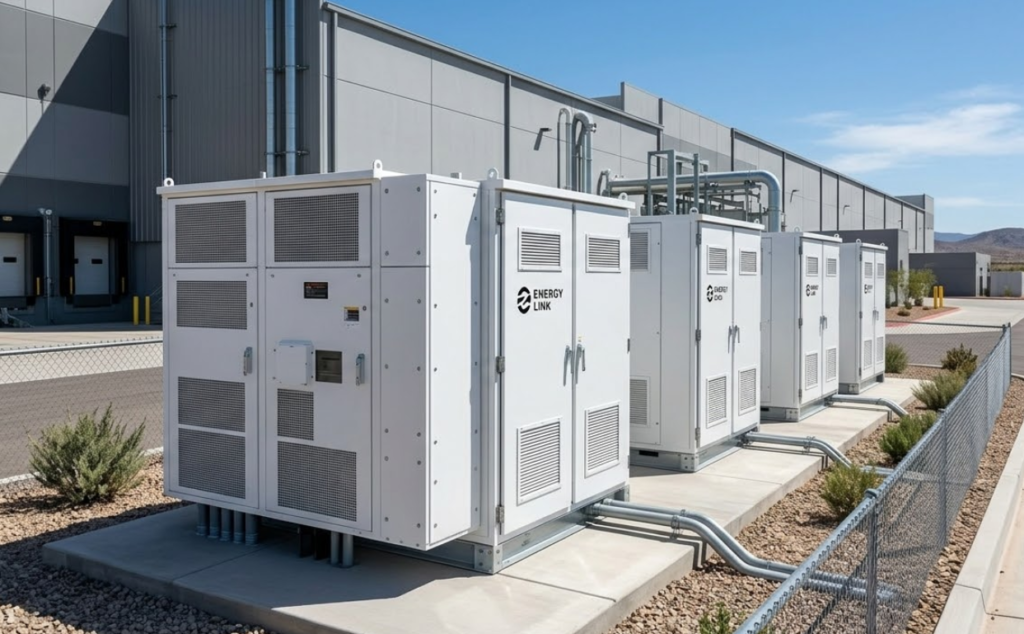
So, how to prevent thermal runaway in BESS when deploying commercial and industrial systems? It requires a multi-layered defense strategy. You cannot rely on a single safety mechanism.
1. The Brain: Advanced Battery Management Systems (BMS)
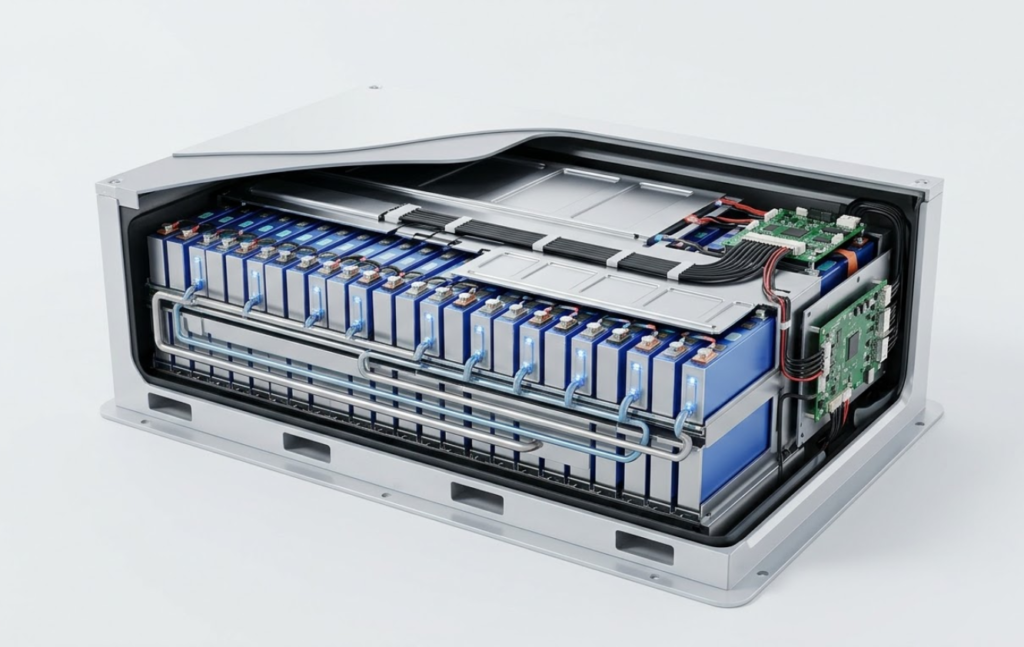
The BMS is your frontline defense. It continuously monitors the voltage, current, and temperature of every single cell. In the systems we deploy, the BMS is programmed with aggressive cut-off thresholds. If a cell starts drifting out of its safe temperature range, the BMS isolates that module from the rest of the rack before the heat can build up.
2. The Lungs: Thermal Management Systems
Keeping the batteries at an optimal, uniform temperature is non-negotiable. While older or smaller systems use air cooling, modern high-density setups have shifted towards liquid cooling. Liquid coolants absorb and move heat much faster than air, practically eliminating the localized hot spots that trigger thermal abuse. Evaluating different energy storage system cooling technologies is a critical step in the procurement process.
Table 2: Comparison of BESS Thermal Management Systems
| Cooling Method | Heat Dissipation | System Complexity | Temperature Uniformity | Suitability for High-Density BESS |
| Air Cooling | Low to Moderate | Low (Fans and HVAC) | Poor (Prone to hot spots) | Better for low C-rate / smaller systems |
| Liquid Cooling | Very High | High (Pumps, coolant loops) | Excellent | Ideal for utility-scale & high capacity |
3. The Shield: Fire Suppression and Isolation
If a cell does fail, the goal shifts from prevention to containment. We use aerospace-grade aerogel insulation pads between battery cells. If one cell goes into thermal runaway, the aerogel acts as a firewall, stopping the heat from reaching the cell next to it.
As an engineer deeply involved in manufacturing, I know that building a truly safe system starts at the factory floor. Whether you are looking for reliable OEM energy storage system manufacturing or require highly specialized custom BESS solutions for overseas markets, partnering with a manufacturer that integrates these multi-level fail-safes—from LFP chemistry to active liquid cooling—is the only way to protect your investment and ensure grid stability.
Industry Standards and Certifications to Look For
You shouldn’t just take a manufacturer’s word for it when it comes to safety. Rigorous testing protocols exist for a reason.
The gold standard right now is UL 9540A. This isn’t just a pass/fail test; it’s a destructive testing method that deliberately forces a battery into thermal runaway to see exactly how the system reacts and whether the fire propagates. Furthermore, system integrators must adhere to NFPA 855, the standard for the installation of stationary energy storage systems, which dictates spacing, ventilation, and fire suppression requirements. You can learn more about the rigorous testing methodologies on the UL Solutions official 9540A page.
Conclusion
Thermal runaway is a formidable physical reality of high-density energy storage, but it is not an insurmountable one. By choosing stable chemistries like LFP, implementing proactive liquid cooling, designing smart BMS architectures, and relying on robust commercial energy storage fire suppression systems, we can tame the fire before it ever sparks.
After 20 years in this field and gigawatt-hours of deployment experience, my philosophy remains simple: safety isn’t an add-on feature. It is the very foundation upon which the future of renewable energy is built.

Frequently Asked Questions (FAQs) About BESS Safety
1. What temperature does thermal runaway start in a lithium-ion battery?
It heavily depends on the chemistry. For NMC batteries, thermal runaway can trigger between 150°C to 200°C. For the safer LFP batteries widely used in modern stationary storage, the threshold is significantly higher, typically requiring temperatures above 270°C before catastrophic failure begins.
2. Can thermal runaway be stopped once it starts?
Once a single cell enters full thermal runaway, it is practically impossible to stop the internal chemical reaction of that specific cell. The engineering objective is containment. We design systems to prevent the heat and fire from propagating to adjacent cells or modules using thermal barriers and rapid cooling.
3. Why is liquid cooling considered better for preventing thermal runaway?
Liquid cooling utilizes a coolant fluid that has a much higher heat transfer coefficient than forced air. It can maintain a highly uniform temperature across thousands of tightly packed battery cells, dramatically reducing the risk of localized hot spots—one of the primary triggers of thermal abuse.
4. How does a Battery Management System (BMS) prevent battery fires?
A BMS acts as the system’s nervous system. It continuously monitors the micro-data of the battery: voltage, current, and temperature at the cell level. If the BMS detects anomalies—like a cell overcharging or heating up faster than it should—it will automatically trigger contactors to disconnect the circuit, preventing further stress.
5. Are LFP (Lithium Iron Phosphate) batteries immune to thermal runaway?
No battery storing dense energy is 100% immune. However, LFP batteries are inherently much safer than other lithium-ion variants. Their strong chemical structure makes them highly resistant to breaking down and releasing oxygen, meaning they are far less likely to catch fire even under severe stress or puncture.


