
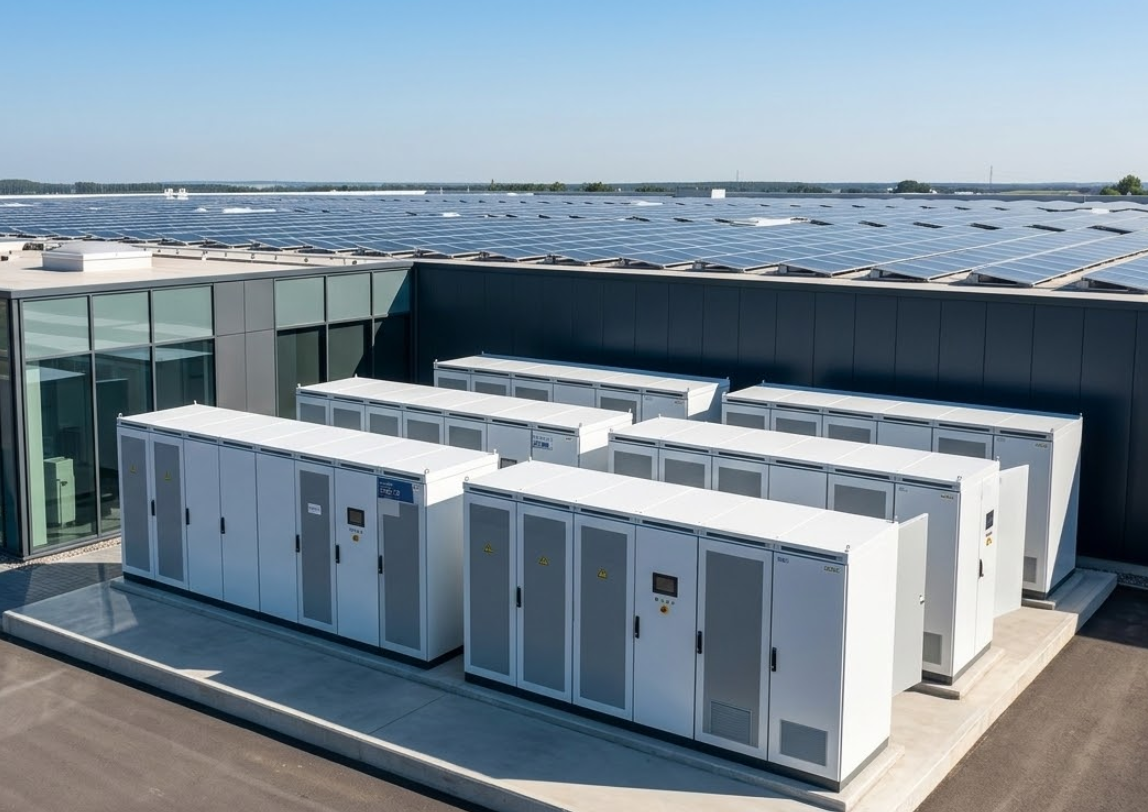
Introduction: Why Your Factory Needs to Understand the Real Cost of Energy Storage
If you’re a factory manager or procurement officer evaluating industrial battery storage systems in 2026, you’ve likely encountered a frustrating reality: the price you’re quoted depends almost entirely on who you’re buying from.
A 100 kWh LiFePO4 system might be quoted at $18,000 from a direct manufacturer, but $35,000 from a trading company. The difference isn’t quality—it’s margin. And that margin directly impacts your return on investment.
The industrial battery storage market has matured significantly since 2024. Pricing has stabilized, technology has standardized, and supply chains have normalized. Yet many factories still overpay by 30–50% because they don’t understand the cost structure or the tactics used by middlemen to obscure it.
This guide cuts through the noise. We’ll walk through the real pricing, the technical specifications that separate Tier-1 manufacturers from the rest, and the ROI calculations that determine whether energy storage makes financial sense for your operation.
Factory-Direct BESS ROI Calculator
System Parameters
Estimated Annual Savings
$0
Estimated Payback Period
0 Years
* Based on 1 full cycle per day, 300 operational days/year, 90% DOD, and 92% Round-Trip Efficiency.
The Hidden Costs of Industrial Battery Storage: Trading Companies vs. Direct Manufacturers
Why the Price Varies So Dramatically
When you request a quote for a 500 kWh containerized energy storage system, you might receive three different prices:
•Direct from manufacturer: $125,000–$150,000
•From a regional distributor: $165,000–$180,000
•From an international trading company: $190,000–$210,000
All three are quoting the same system. The difference is the supply chain.
The Trading Company Markup Problem
Trading companies operate on a simple model: buy low from manufacturers, sell high to end users. Their markup typically ranges from 30–50% on the hardware alone, plus additional fees for:
•Engineering consultation (often generic templates)
•Project management (minimal involvement)
•Warranty administration (often passed back to the manufacturer)
•After-sales support (frequently outsourced or unavailable)
For a $150,000 system, a 40% markup adds $60,000 to your cost. At typical peak shaving savings of $2,000/month, this extra $60,000 extends your payback period by 30 months—from 3 years to 5.5 years.
The Information Asymmetry Advantage
Trading companies thrive on information gaps. They know:
•The true manufacturing cost (often $120–$180/kWh installed)
•Your budget constraints
•Your timeline pressure
•Your lack of technical expertise
They exploit these gaps by:
1.Inflating soft costs: Claiming interconnection studies will cost $50,000 when the real cost is $15,000
2.Sourcing from lower-tier manufacturers: Using Tier-2 or Tier-3 battery suppliers to maximize margin while claiming “equivalent” performance
3.Burying warranty terms: Using complex language to obscure that their warranty is actually the manufacturer’s warranty, with them as a middleman
4.Creating artificial urgency: “This price is only valid for 48 hours” or “Lead times are extending”
Direct Manufacturer Advantages
When you buy directly from a Tier-1 manufacturer, you eliminate these layers:
•Transparent pricing: You see the actual cost of each component (battery, PCS, enclosure, BMS, installation)
•Quality control: You work with the engineering team that designed and tested the system
•Faster lead times: No distributor inventory delays; production aligns with your timeline
•Genuine after-sales support: Direct access to technical teams, not a call center
•Warranty clarity: You understand exactly what’s covered and who’s responsible
For a factory making a $150,000+ investment, the difference between buying from a trading company and a direct manufacturer can be $40,000–$60,000 in savings, plus faster deployment and better long-term support.
Core Technologies That Define a Tier-1 Industrial Battery Storage System
Not all 100 kWh systems are created equal. The difference between a system that delivers 15 years of reliable performance and one that degrades rapidly comes down to core technical choices.
Battery Chemistry: LiFePO4 (LFP) Is Now the Standard
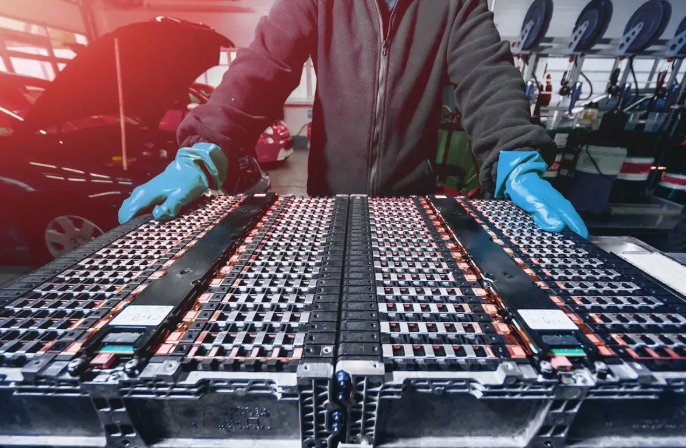
By 2026, LiFePO4 has become the de facto standard for industrial energy storage. Here’s why:
| Feature | LiFePO4 (LFP) | NMC Lithium | Lead-Acid |
| Cycle Life | 8,000–10,000 cycles | 3,000–5,000 cycles | 1,000–2,000 cycles |
| Usable DoD | 80–95% | 60–80% | 50% |
| Thermal Stability | Excellent (safe to 60°C) | Moderate (risky above 45°C) | Poor |
| Fire Risk | Very low | Moderate | Low but toxic |
| Lifespan | 10–15 years | 5–8 years | 3–5 years |
| Cost per kWh | $140–$240 (module) | $180–$280 (module) | $80–$120 (module) |
| Cost per Delivered kWh (lifecycle) | $18–$24 | $36–$56 | $80–$160 |
LFP’s advantage isn’t just safety—it’s cost per delivered kilowatt-hour over the system’s lifetime. Even though the upfront module cost is similar to NMC, the longer cycle life and deeper usable discharge depth mean you get 3–5x more energy delivery over 15 years.
Battery Management System (BMS): The Brain of Your System
The BMS is where quality separates Tier-1 manufacturers from everyone else.
Tier-1 BMS Features:
•Active cell balancing: Continuously monitors and balances individual cells, extending cycle life by 15–20%
•Cloud-based monitoring: Real-time SOC (State of Charge), SOH (State of Health), and performance metrics
•Predictive diagnostics: Alerts you to potential issues before they cause downtime
•Multi-cluster control: Manages parallel battery stacks seamlessly
•Firmware updates: Manufacturers push improvements remotely without system downtime
Tier-2/3 BMS Limitations:
•Passive balancing only (less effective)
•Local monitoring only (no remote diagnostics)
•Fixed firmware (no improvements after purchase)
•Limited communication protocols
For a factory running 24/7, the difference between Tier-1 and Tier-2 BMS can mean the difference between 99.5% uptime and 95% uptime. That 4.5% difference translates to 33 hours of potential downtime per year—which could cost tens of thousands in lost production.
Thermal Management: Liquid Cooling vs. Air Cooling
This is where industrial systems diverge from residential systems.
Liquid Cooling (Tier-1 Standard):
•Maintains battery temperature at 20–35°C (optimal range)
•Enables 90–95% DoD safely (vs. 80% with air cooling)
•Uses perfluorohexane (PFH) or aerosol fire suppression
•Adds ~$15–20/kWh to system cost
•Extends cycle life by 20–30%
•Enables higher power density
Air Cooling (Cost-Cutting Approach):
•Maintains temperature at 25–45°C (acceptable but not optimal)
•Limits DoD to 80% for safety
•Requires external HVAC systems
•Saves ~$10–15/kWh upfront
•Reduces cycle life by 15–20%
•Requires more space
The Math: A liquid-cooled system costs $3,000–$5,000 more upfront but delivers an extra 1,500–2,000 cycles over its lifetime. At $0.10/kWh of delivered energy, that’s $150–$200 in additional value. For a factory running peak shaving 300 days/year, this pays for itself in 2–3 years.
Power Conversion System (PCS): The Bridge Between Battery and Grid
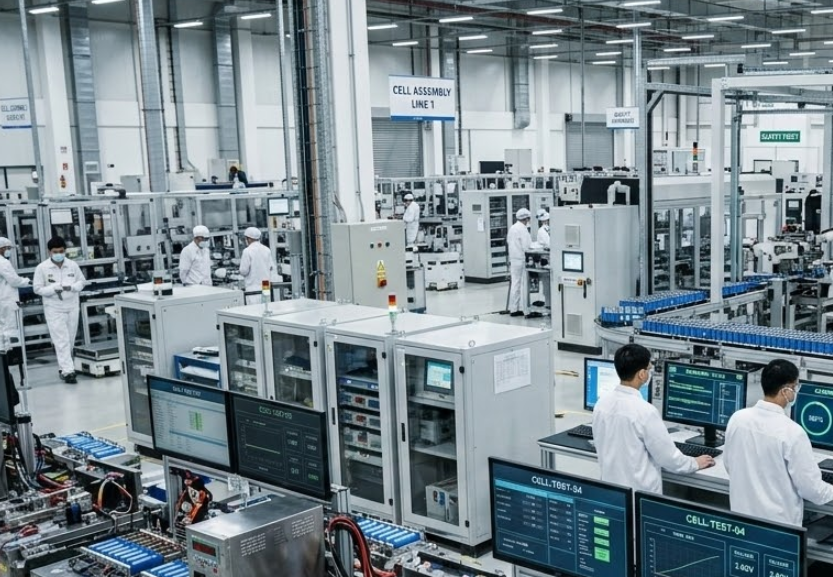
The PCS (also called inverter or power converter) is the second-largest cost component after the battery itself, typically representing 15–25% of total system cost.
Tier-1 PCS Specifications:
•Efficiency: 96–98% (round-trip)
•Response time: <100 milliseconds (critical for grid stability)
•Harmonics compliance: THD <3% (meets IEEE 519 standards)
•Redundancy: N+1 architecture (one unit can fail without system shutdown)
•Communication: CAN, Modbus, DNP3 (enterprise protocols)
Why This Matters: A poorly specified PCS can waste 2–4% of your stored energy in conversion losses. For a system cycling 300 times per year, that’s 600–1,200 kWh of wasted energy annually. At $0.12/kWh, that’s $72–$144/year in lost savings—over 15 years, that’s $1,080–$2,160 in cumulative losses.
System Specifications: What Tier-1 Manufacturers Standardize On
By 2026, Tier-1 manufacturers have converged on these specifications:
| Specification | Tier-1 Standard | Why It Matters |
| Cycle Life | 8,000+ @ 80–95% DoD | Determines replacement timeline |
| Warranty | 10 years | Industry baseline |
| Remaining Capacity at EOL | ≥70% SOH | Ensures usable energy throughout warranty |
| BMS Type | Active balancing + cloud monitoring | Maximizes cycle life and uptime |
| Thermal Management | Liquid cooling (industrial) | Enables higher DoD and power density |
| Fire Suppression | Aerosol or PFH system | Meets EU/US safety standards |
| Communication | CAN + Modbus + cloud API | Enterprise integration |
| Enclosure Rating | IP54 or higher | Protection against dust/moisture |
ROI Analysis: Is Industrial Battery Storage Worth the Investment?
The decision to install energy storage comes down to one question: How long until the system pays for itself?
The Three Revenue Streams
Industrial battery storage generates returns through three mechanisms:
1. Peak Shaving / Demand Charge Reduction
This is the primary ROI driver for most factories.
How it works: Your utility charges two rates:
•Energy rate: $0.08–$0.15/kWh (what you pay for electricity used)
•Demand rate: $15–$25/kW/month (what you pay for your peak usage in any 15-minute interval)
For a factory with a 500 kW peak demand, the demand charge alone might be $7,500–$12,500/month ($90,000–$150,000/year).
A 500 kWh battery system can shave 100–150 kW off your peak demand by discharging during peak hours. This reduces your monthly demand charge by $1,500–$3,750, or $18,000–$45,000/year.
Payback calculation:
•System cost: $500 kWh × $250/kWh = $125,000
•Annual savings: $30,000 (mid-range estimate)
•Payback period: 4.2 years
2. Time-of-Use (TOU) Arbitrage
Many utilities offer time-of-use rates where peak hours cost 3–5x more than off-peak hours.
How it works: Charge your battery during off-peak hours ($0.05/kWh), discharge during peak hours ($0.20/kWh). The $0.15/kWh spread generates revenue.
Example:
•System: 500 kWh
•Daily cycles: 1 cycle/day
•Spread: $0.15/kWh
•Daily revenue: 500 kWh × $0.15 = $75
•Annual revenue: $27,375 (365 days)
Payback period: 4.6 years
3. Grid Services / Virtual Power Plant (VPP) Participation
Emerging revenue stream where grid operators pay you to provide frequency regulation, voltage support, or emergency capacity.
•Frequency regulation: $50–$100/MW/day
•Capacity payments: $10,000–$50,000/MW/year
•Emergency dispatch: $200–$500/MWh
For a 500 kWh system, VPP participation might generate $5,000–$15,000/year.
Combined ROI Model: Peak Shaving + TOU Arbitrage
Most factories optimize for both peak shaving AND time-of-use arbitrage:
| Revenue Stream | Annual Amount | Contribution |
| Peak shaving | $30,000 | 60% |
| TOU arbitrage | $15,000 | 30% |
| VPP participation | $5,000 | 10% |
| Total Annual Revenue | $50,000 | 100% |
System Cost: $125,000 (500 kWh @ $250/kWh)
Payback Period: 2.5 years
15-Year Lifecycle Value: $750,000 (revenue) – $125,000 (cost) = $625,000 net
The Impact of Incentives
In the US, a standalone BESS project qualifies for a 30–40% federal Investment Tax Credit (ITC).
With 30% ITC:
•System cost: $125,000
•Tax credit: $37,500
•Effective cost: $87,500
•New payback period: 1.75 years
This single incentive cuts your payback period by nearly 40%.
Payback Period by Application (2026 Benchmark)
| Application | Payback Period | Annual Savings | Best For |
| Peak shaving only | 3–5 years | $18,000–$45,000 | High demand charges |
| TOU arbitrage only | 4–6 years | $15,000–$25,000 | Large TOU spreads |
| Backup + peak shaving | 4–6 years | $20,000–$40,000 | Reliability-critical |
| Microgrid / off-grid | 2.5–4 years | $30,000–$60,000 | Remote locations |
| VPP participation | 3–5 years | $25,000–$50,000 | Grid-connected only |
Our Factory Quality Control Process
At a Tier-1 manufacturer, every system goes through rigorous testing before it leaves the factory:
1.Cell-level testing: Each LFP cell is tested for capacity, internal resistance, and safety
2.Module assembly: Cells are assembled into modules with active BMS, tested for balance accuracy
3.System integration: Modules are integrated with PCS, EMS, and thermal management; full system test
4.Thermal cycling: System undergoes 10–20 thermal cycles (-10°C to +50°C) to verify stability
5.Load testing: System is charged and discharged at rated power for 50+ cycles to verify performance
6.Safety certification: System is tested against UL1973, UL9540, IEC62619, and UN38.3 standards
7.Factory acceptance test (FAT): Customer’s engineer witnesses final test before shipment
This process takes 2–3 weeks per system but ensures that what arrives at your facility is production-ready, not a prototype.
FAQs About Industrial Battery Storage
Q1: What’s the difference between a 6,000-cycle and 8,000-cycle battery?
A: The difference is in how long the battery maintains usable capacity.
A 6,000-cycle battery might be rated at 80% DOD (depth of discharge), meaning you can only use 80% of its capacity without risking degradation. An 8,000-cycle battery at 95% DOD gives you more usable energy per cycle.
Real-world impact: Over 15 years, an 8,000-cycle battery delivers 20–30% more total energy than a 6,000-cycle battery, even if the upfront cost is similar.
Tier-1 standard (2026): 8,000+ cycles @ 80–95% DOD is now the baseline.
Q2: Should I buy from a trading company or directly from the manufacturer?
A: Direct from the manufacturer, if possible.
Trading companies add 30–50% markup and provide minimal value:
•They don’t design the system
•They don’t manufacture the components
•They don’t provide technical support
•They’re just a middleman
A direct manufacturer gives you:
•Transparent pricing (you know what each component costs)
•Technical support (you talk to engineers, not a sales rep)
•Faster lead times (no distributor inventory delays)
•Warranty clarity (you know exactly who’s responsible)
Cost difference: $150,000 system from a direct manufacturer vs. $210,000 from a trading company = $60,000 saved, which extends your payback period by 2+ years.
Q3: What happens if my battery degrades faster than expected?
A: Tier-1 manufacturers warranty this.
A Tier-1 warranty typically guarantees:
•8,000+ cycles over 10 years
•≥70% capacity retention at end of warranty
•Full replacement if capacity falls below 70%
If your battery degrades to 65% capacity in year 5, the manufacturer replaces it at no cost.
Tier-2/3 manufacturers: Often have loopholes (“only covers manufacturing defects, not normal degradation”) or require you to prove degradation through expensive testing.
Get a Factory-Direct Quote Today
You now understand the real cost of industrial battery storage, the technology that separates Tier-1 from the rest, and the ROI timeline that determines whether it makes sense for your operation.
The next step is simple: Get a customized quote from a direct manufacturer.
We provide OEM/ODM customization for factories worldwide:
•LiFePO4 technology: 8,000+ cycle life, 10-year warranty
•Scalable solutions: From 10 kWh to 20 MWh+
•Liquid cooling: Standard on industrial systems
•Advanced BMS: Cloud monitoring, predictive diagnostics
•Fast lead times: 8–12 weeks for standard configurations
•5-year service guarantee: Direct technical support, no middlemen
Click the WhatsApp icon in the bottom-right corner to connect with our engineering team. Share your:
•Factory peak demand (kW)
•Monthly electricity costs
•Current utility rate structure
•Timeline for deployment
We’ll provide a detailed, transparent quote—no hidden fees, no trading company markup.
Your factory deserves direct access to Tier-1 technology at fair pricing. Let’s get you there.


